Formstack Alternative for Agile Process-Driven Teams
Compare leading alternatives to Formstack for approvals, process management, operational workflows, document-driven requests, and scalable business execution across growing organizations.
Formstack is commonly used by organizations that need structured workflow
automation, approval routing, document generation, and operational process
management. Its platform helps businesses standardize how requests, forms,
documents, and internal workflows move between teams. For organizations managing
compliance-sensitive or process-heavy operations, Formstack often becomes part of
their day-to-day infrastructure.
As operational requirements evolve, many teams begin searching for a Formstack
alternative that provides greater flexibility, easier administration, modern user
experiences, and more adaptable workflow management. Whether supporting internal
requests, onboarding processes, registrations, approvals, or customer-facing
operations, today's workflow platforms offer different approaches to managing
business processes efficiently and at scale.
Alternativa recomendada
1. Kiwiform : Workflow Management Designed for Modern Teams
Create structured business processes that connect requests, approvals, registrations, applications, and operational workflows without relying on heavyweight enterprise workflow systems.
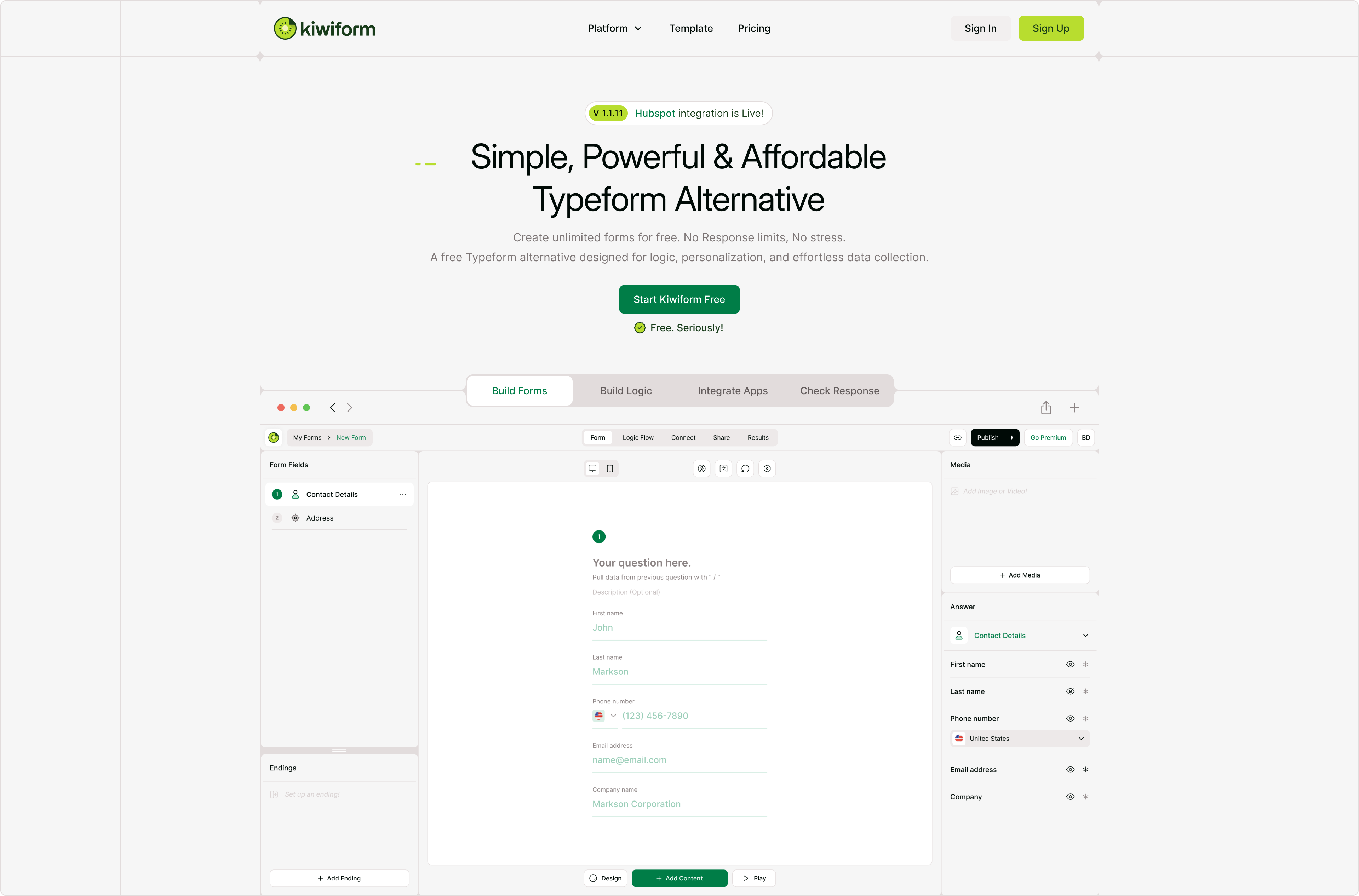
Many organizations adopt Formstack to automate operational processes and standardize workflow execution. Kiwiform approaches process management differently by combining configurable workflows, advanced routing, approvals, personalization, integrations, and conversational experiences within a single platform. This allows teams to manage operational complexity while maintaining usability for both administrators and respondents. As a Formstack alternative, Kiwiform is designed for organizations that want process flexibility without administrative burden. Teams can manage onboarding, internal requests, applications, approvals, registrations, intake processes, and operational workflows while benefiting from unlimited forms and unlimited responses as requirements grow.
Comienza a construir con Kiwiform- Ventajas
- Formularios y respuestas ilimitados
- Workflow automation capabilities
- Approval process support
- Flexible routing and logic
- Conversational user experiences
- Opciones de personalización extensas
- Desventajas
- Smaller ecosystem than enterprise vendors
- Advanced workflows require planning
- Newer platform than legacy solutions
2. Jotform : Operational Forms for Diverse Business Processes
Support approvals, registrations, document collection, payments, and workflow execution through a platform designed to accommodate a wide range of organizational requirements.
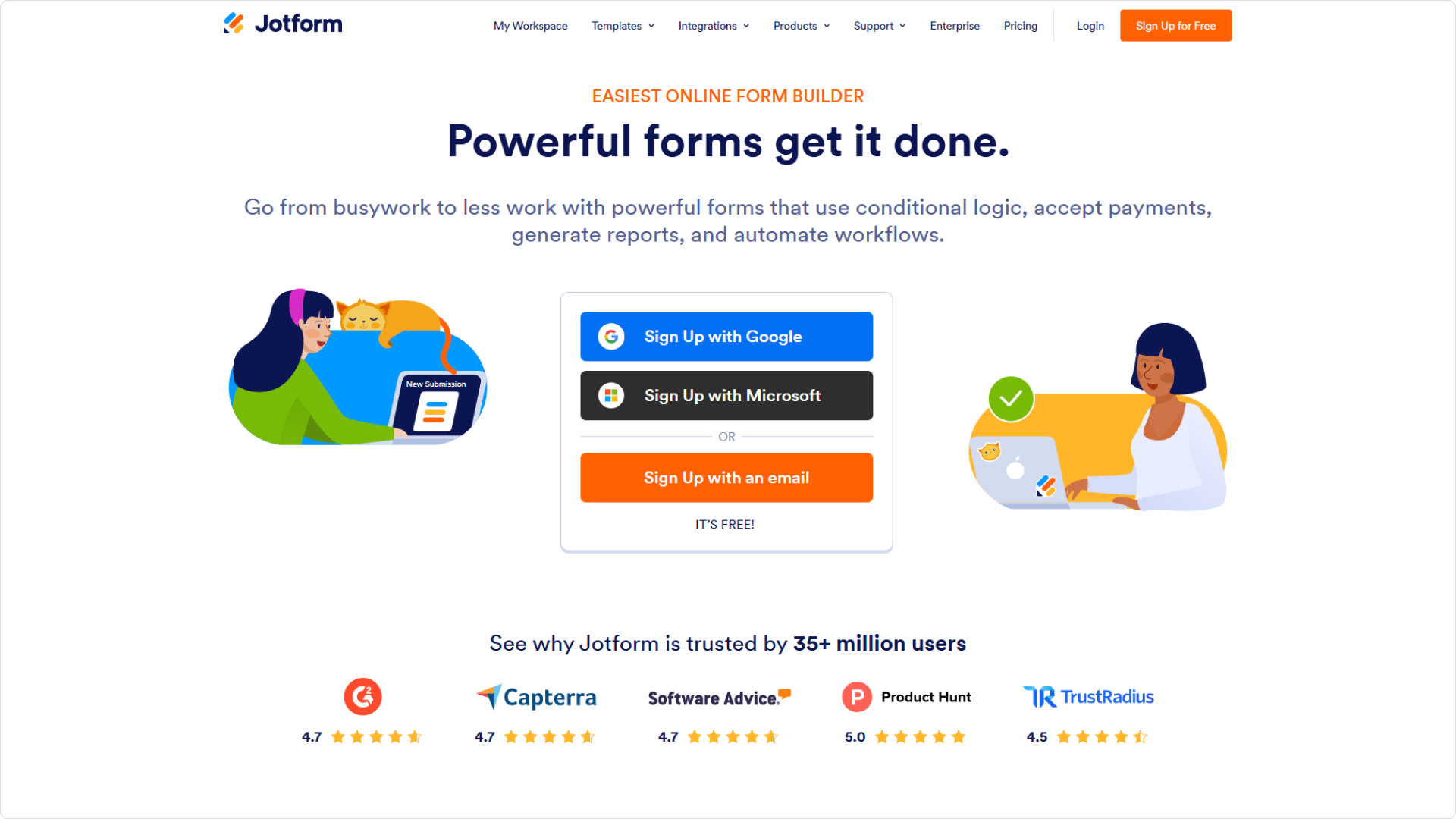
Jotform is frequently chosen by organizations that need operational flexibility across multiple business functions. Its extensive template library, approval tools, integrations, and payment capabilities allow teams to manage everything from registrations and applications to internal requests and departmental processes. For organizations evaluating a Formstack alternative, Jotform provides broad functionality across numerous use cases while supporting both customer-facing and operational workflows.
- Ventajas
- Large template library
- Approval workflow support
- Integraciones amplias
- Payment processing capabilities
- Enterprise-ready features
- Document collection tools
- Desventajas
- Feature-heavy interface
- Learning curve for new users
- Premium plans increase costs
- Usage restrictions by plan
- Administrative complexity
- Advanced tools require upgrades
3. Cognito Forms : Process Execution Through Structured Logic
Manage registrations, applications, estimates, approvals, and operational workflows through advanced calculations, conditional rules, and structured data processing.
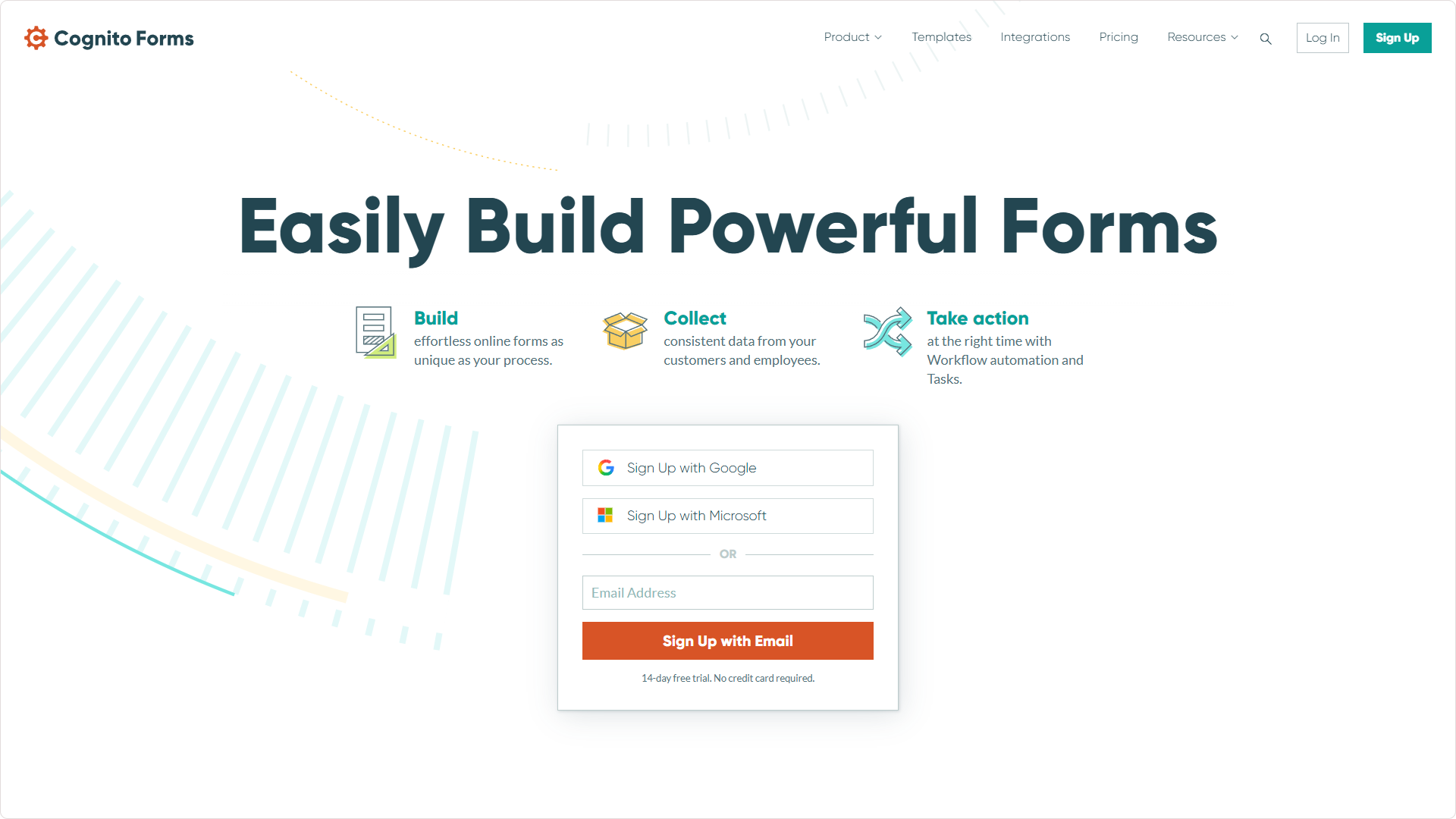
Cognito Forms focuses on helping organizations manage business processes that depend on calculations, pricing logic, workflow routing, and dynamic data handling. Its approach is particularly valuable when workflows require precise rules, structured processing, and repeatable operational outcomes. As a Formstack alternative, Cognito Forms appeals to organizations that prioritize workflow accuracy and detailed process control.
- Ventajas
- Advanced calculation engine
- Workflow routing support
- Repeating data sections
- Payment collection capabilities
- Strong conditional logic
- Detailed data management
- Desventajas
- Traditional user experience
- Design flexibility limitations
- Learning curve for calculations
- Limited conversational experiences
- Smaller integration ecosystem
- Premium features require upgrades
4. Fillout : Workflow Collection Connected to Business Data
Connect operational forms directly to databases, business systems, and structured records while maintaining modern user experiences and flexible process execution.
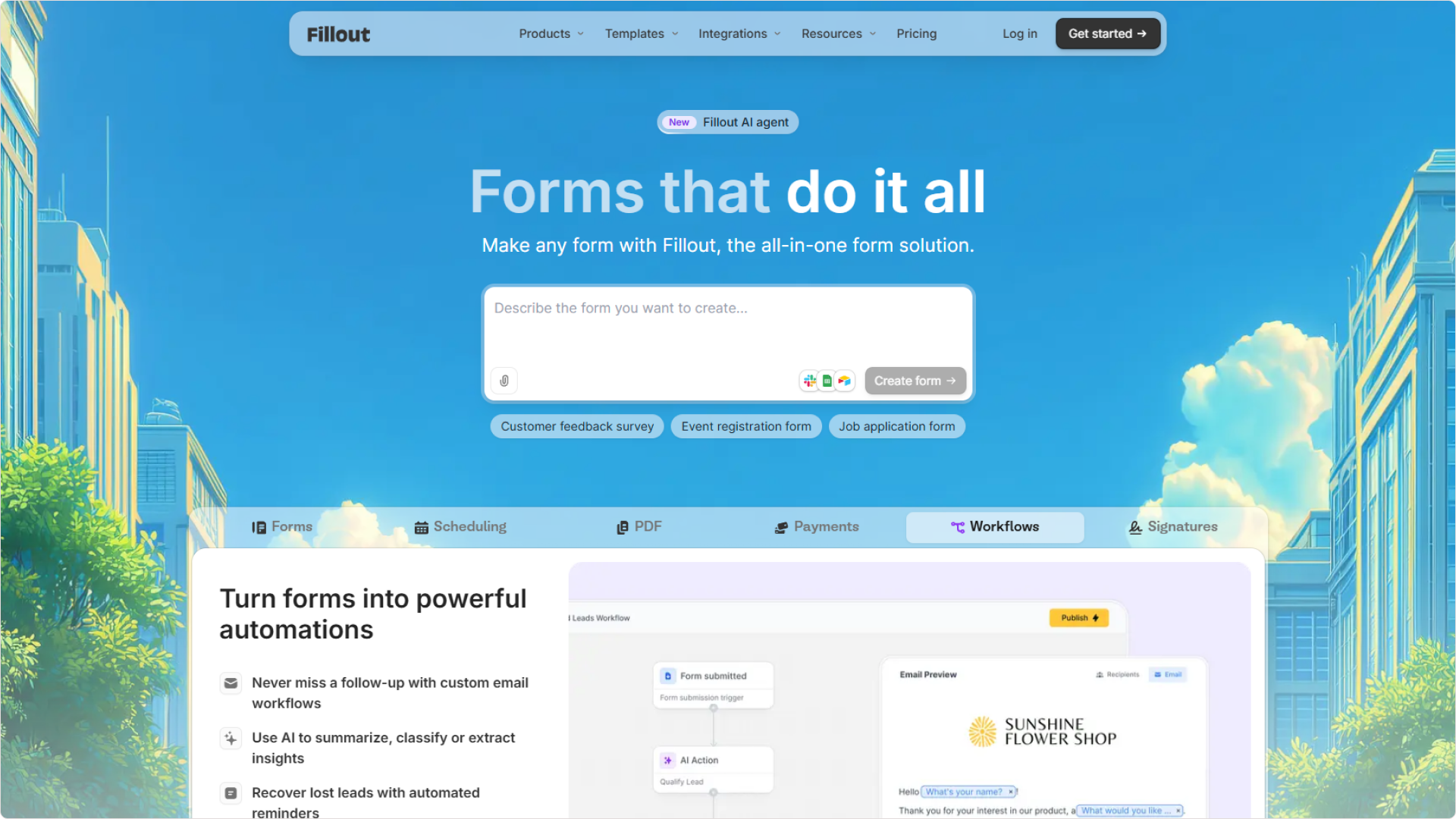
Fillout is often selected by teams that want workflow collection closely connected to operational data. By integrating forms with Airtable, Notion, CRMs, and other business systems, organizations can streamline information flow across teams and processes. For businesses seeking a Formstack alternative, Fillout offers a modern approach to workflow collection that prioritizes data connectivity and operational visibility.
- Ventajas
- Database synchronization
- Integración con Airtable
- Conectividad con Notion
- Diseños flexibles
- Modern user experience
- Strong workflow integrations
- Desventajas
- Premium branding controls
- Límites de uso por plan
- Características avanzadas restringidas
- Smaller enterprise footprint
- Integration setup complexity
- Costs increase with scale
5. Gravity Forms : Operational Workflows Inside WordPress
Build approval processes, registrations, applications, and workflow-driven forms directly within WordPress environments using a highly extensible platform.
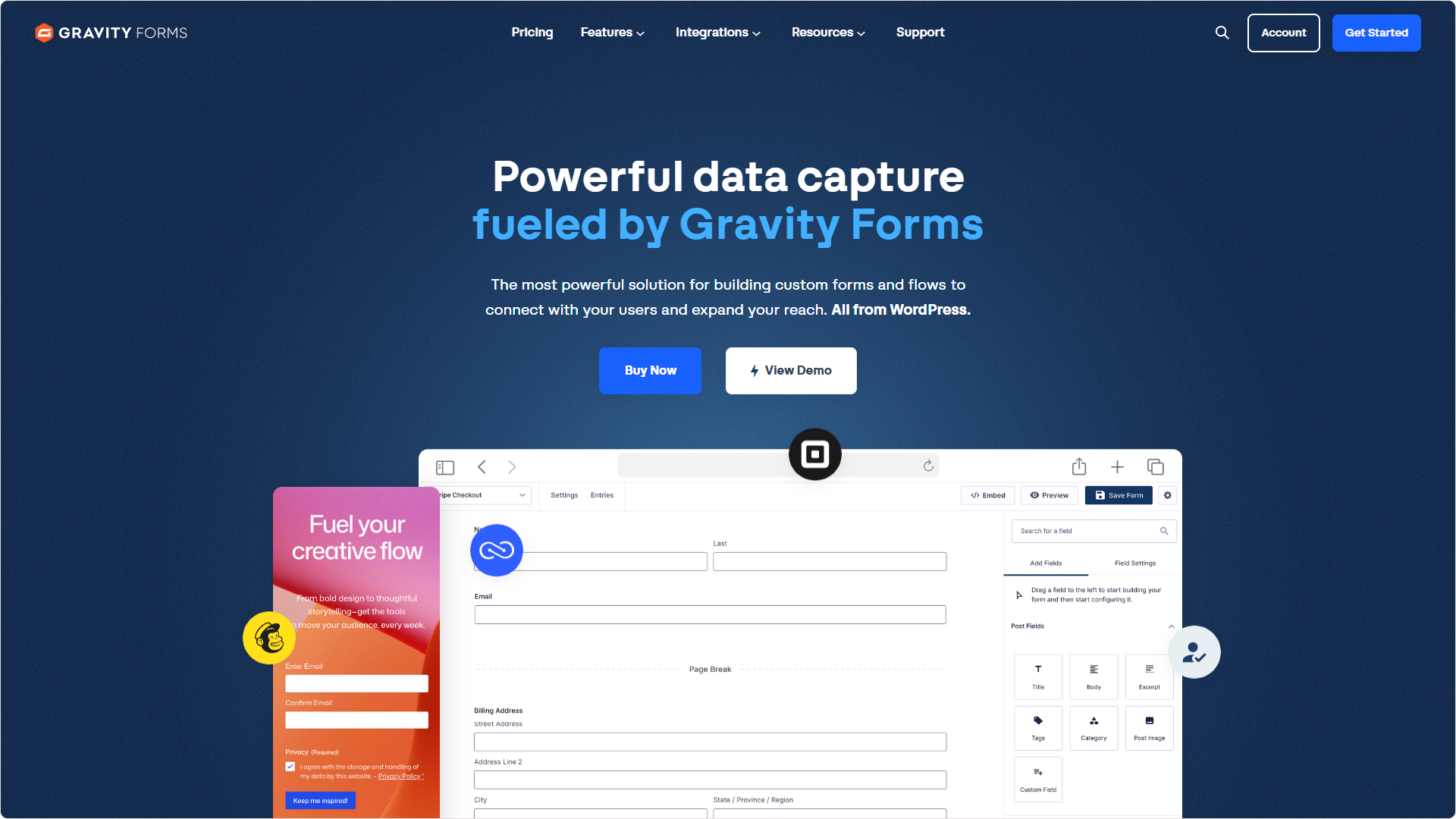
Gravity Forms is widely used by organizations that operate entirely within WordPress. Its logic engine, integrations, developer controls, and extensive add-on ecosystem allow businesses to create customized workflow processes while maintaining ownership of their infrastructure. As a Formstack alternative, Gravity Forms appeals to organizations that want operational flexibility while remaining within the WordPress ecosystem.
- Ventajas
- Integración profunda con WordPress
- Flexible logic engine
- Large add-on ecosystem
- Developer customization
- Workflow flexibility
- Self-hosted control
- Desventajas
- WordPress-only solution
- Technical setup required
- Sin plan gratuito permanente
- Older administrative interface
- Los complementos premium aumentan los costos
- Less suitable outside WordPress
6. Paperform : Process Management Combined with Customer Experience
Blend applications, requests, bookings, registrations, approvals, and operational workflows within highly customizable customer-facing experiences.
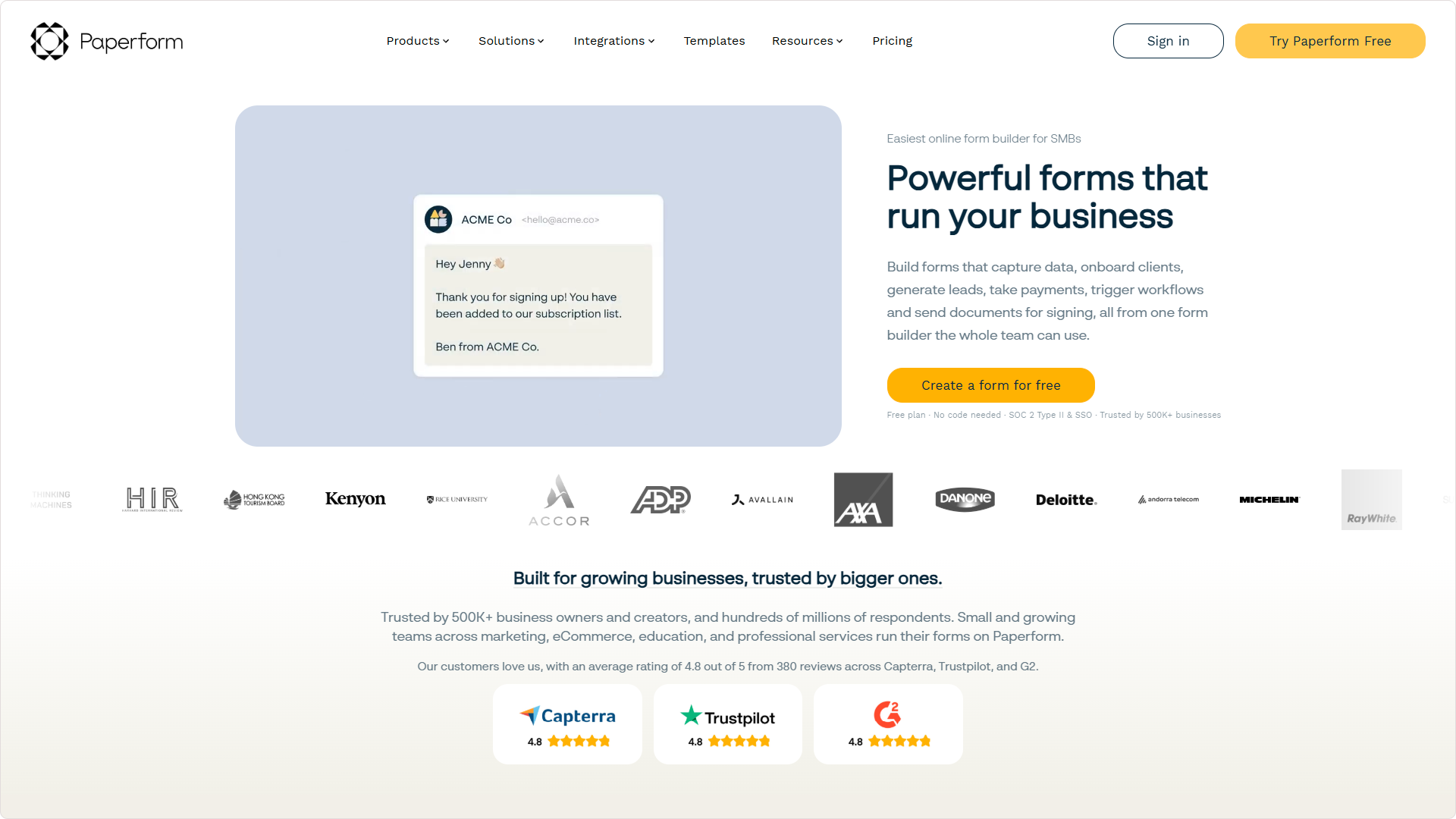
Paperform approaches process management through flexibility and presentation. Organizations can create workflows that collect information, process requests, accept payments, schedule appointments, and manage customer interactions while maintaining strong branding and design control. For organizations comparing a Formstack alternative, Paperform offers a balance between workflow execution and customer experience design.
- Ventajas
- Control de marca fuerte
- Diseños flexibles
- Booking functionality
- Soporte para la recolección de pagos
- Content-rich experiences
- Calculation capabilities
- Desventajas
- Estructura de precios más alta
- Sin plan gratuito permanente
- Usage limitations
- Learning curve for customization
- Team features cost extra
- Advanced workflows require setup
Recomendación final
Kiwiform: A Formstack Alternative Built for Flexible Process Management
Manage requests, approvals, registrations, applications, and operational workflows through a platform that prioritizes adaptability, usability, and scalable execution.
Formstack is frequently adopted by organizations that need workflow automation, document-driven processes, approval routing, and structured operational workflows. While these capabilities help standardize business operations, many teams eventually seek greater flexibility, simpler administration, and a platform that can support both internal processes and customer-facing interactions without the overhead commonly associated with enterprise workflow suites. Kiwiform helps organizations build and manage operational processes through configurable workflows, structured data collection, approvals, automation, integrations, and unlimited usage. Whether supporting internal requests, applications, registrations, onboarding flows, or operational coordination, Kiwiform provides a modern foundation for executing business processes efficiently while remaining adaptable as requirements evolve.