Paperform Alternative for Design Driven Form Building
Compare leading alternatives for branded forms, client-facing experiences, lead capture, bookings, applications, and design-driven data collection.
Paperform is often chosen by agencies, consultants, creators, marketers, and businesses that want forms to feel like a natural extension of their brand. Its ability to blend content, media, payments, bookings, and data collection into a single experience makes it popular for customer-facing workflows where presentation matters as much as functionality. As organizations grow, many begin looking for a Paperform alternative that offers greater flexibility, stronger customization, scalable usage, modern experiences, and more adaptable ways to create branded forms. Whether collecting leads, accepting applications, processing bookings, or launching campaigns, today's platforms provide multiple approaches to building polished and engaging data collection experiences.
Alternativa recomendada
1. Kiwiform : Branded Experiences Without Design Constraints
Create visually polished forms, applications, registrations, bookings, and customer-facing workflows that reflect your brand from start to finish.
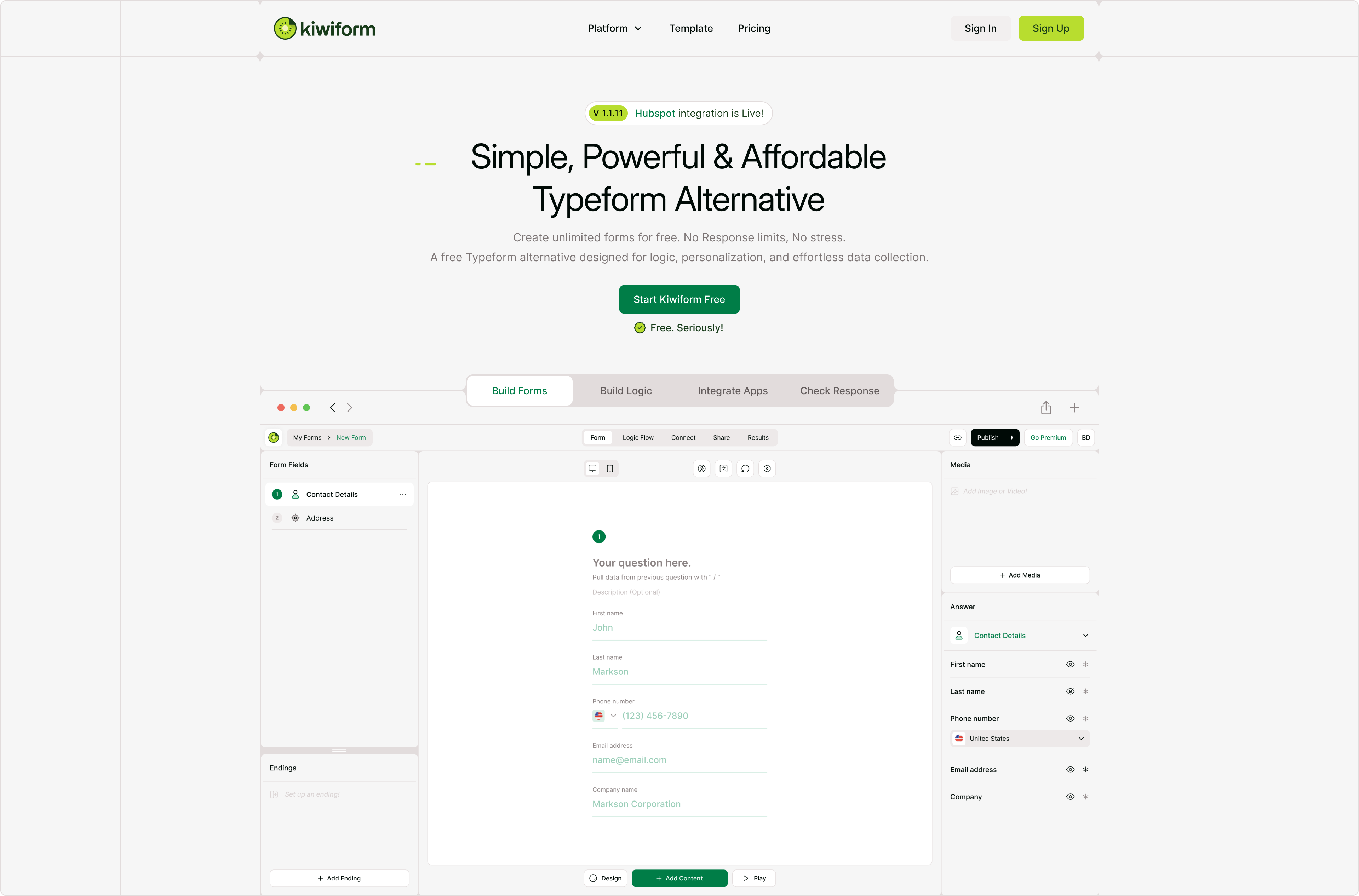
Many organizations choose Paperform because they want more than a standard form. They want experiences that look professional, feel intentional, and align with their brand identity. Kiwiform combines customization, conversational experiences, personalization, media support, payments, logic, and AI-assisted creation to help teams build forms that are both visually engaging and highly functional. As a Paperform alternative, Kiwiform helps businesses create branded experiences without sacrificing scalability or flexibility. Teams can launch lead capture flows, client intake forms, registrations, applications, bookings, and customer journeys while benefiting from unlimited forms and unlimited responses.
Comienza a construir con Kiwiform- Ventajas
- Formularios y respuestas ilimitados
- Extensive visual customization
- Conversational experiences
- AI-powered form creation
- Flexible layouts and branding
- Built-in payments and automation
- Desventajas
- Smaller ecosystem than larger competitors
- Advanced customization requires planning
- Newer platform than legacy vendors
2. Typeform : Premium Experiences Focused on Engagement
Create polished conversational journeys that guide respondents through one question at a time.
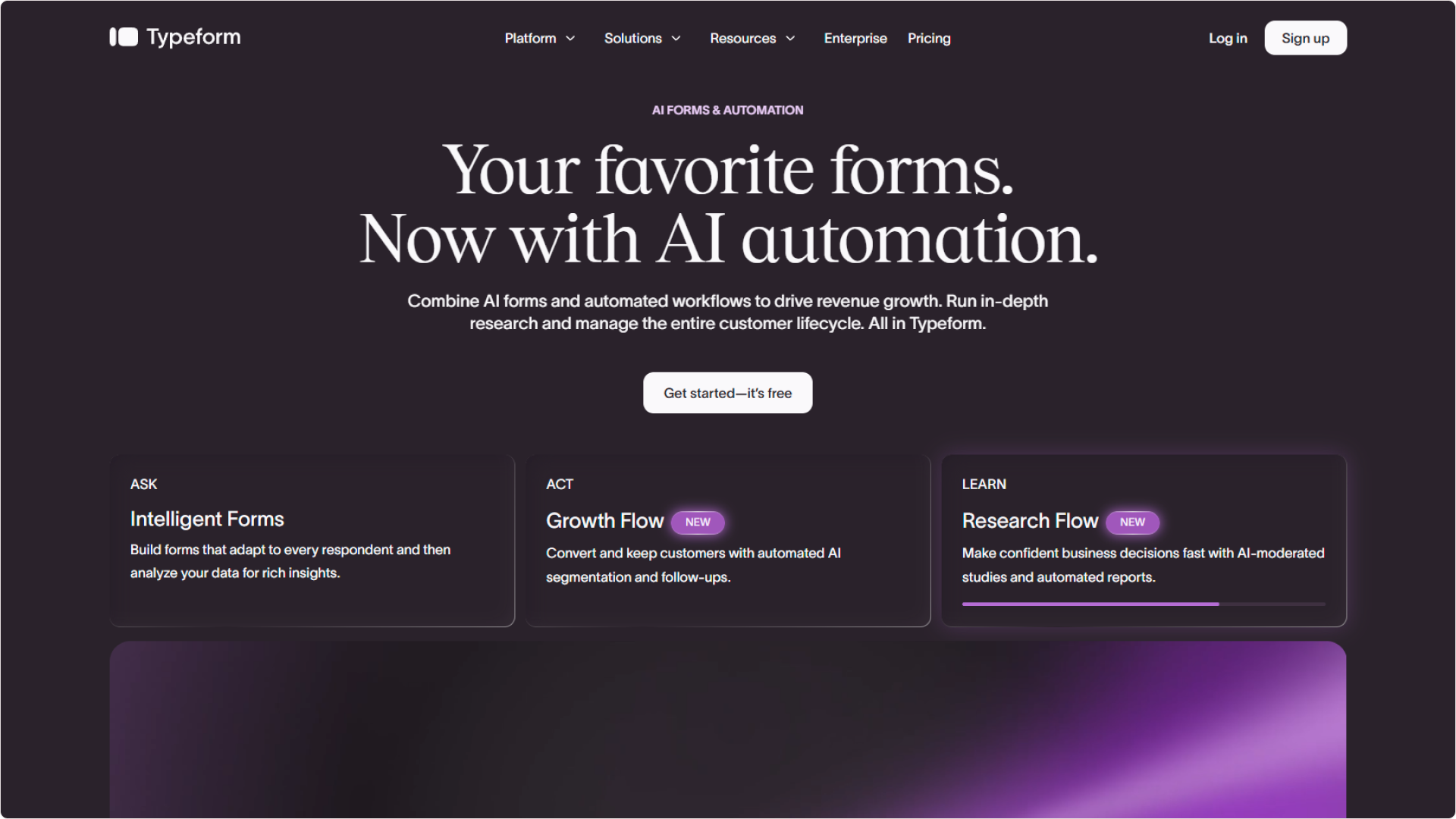
Typeform is widely recognized for transforming forms into interactive experiences. Its conversational approach emphasizes engagement and completion rates, making it a popular choice for lead generation, applications, and customer-facing interactions.
- Ventajas
- Premium user experience
- Conversational format
- Strong brand perception
- Interactive logic tools
- Large integration ecosystem
- High-quality templates
- Desventajas
- Expensive at scale
- Strict response limits
- Premium branding controls
- Limited free usage
- Overage concerns
- Costs increase quickly
3. Fillout : Flexible Experiences Connected to Business Data
Build highly customizable forms that connect directly to operational systems while maintaining modern presentation and usability.
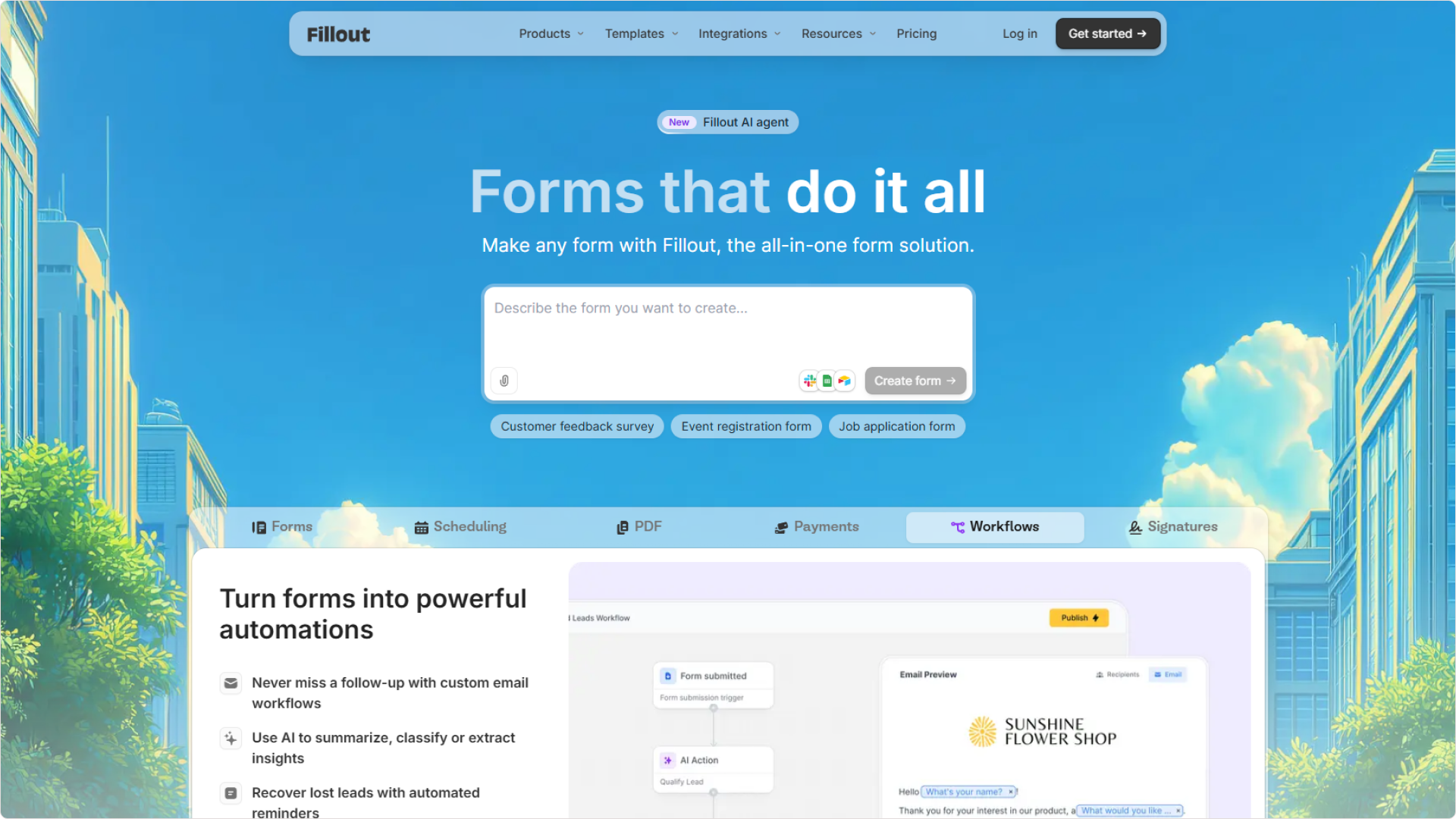
Fillout combines flexible form creation with powerful database connectivity. Organizations can create customer-facing experiences that remain tightly connected to Airtable, Notion, CRMs, and operational workflows.
- Ventajas
- Diseños flexibles
- Database synchronization
- Modern design capabilities
- Integración con Airtable
- Strong workflow connections
- Generous free plan
- Desventajas
- Premium branding controls
- Características avanzadas restringidas
- Integration setup complexity
- Smaller template ecosystem
- Los costos de escalabilidad aumentan
- Enterprise features limited
4. Tally : Fast Publishing for Creators and Small Teams
Turn ideas into forms quickly through a document-style editor designed for speed and simplicity.
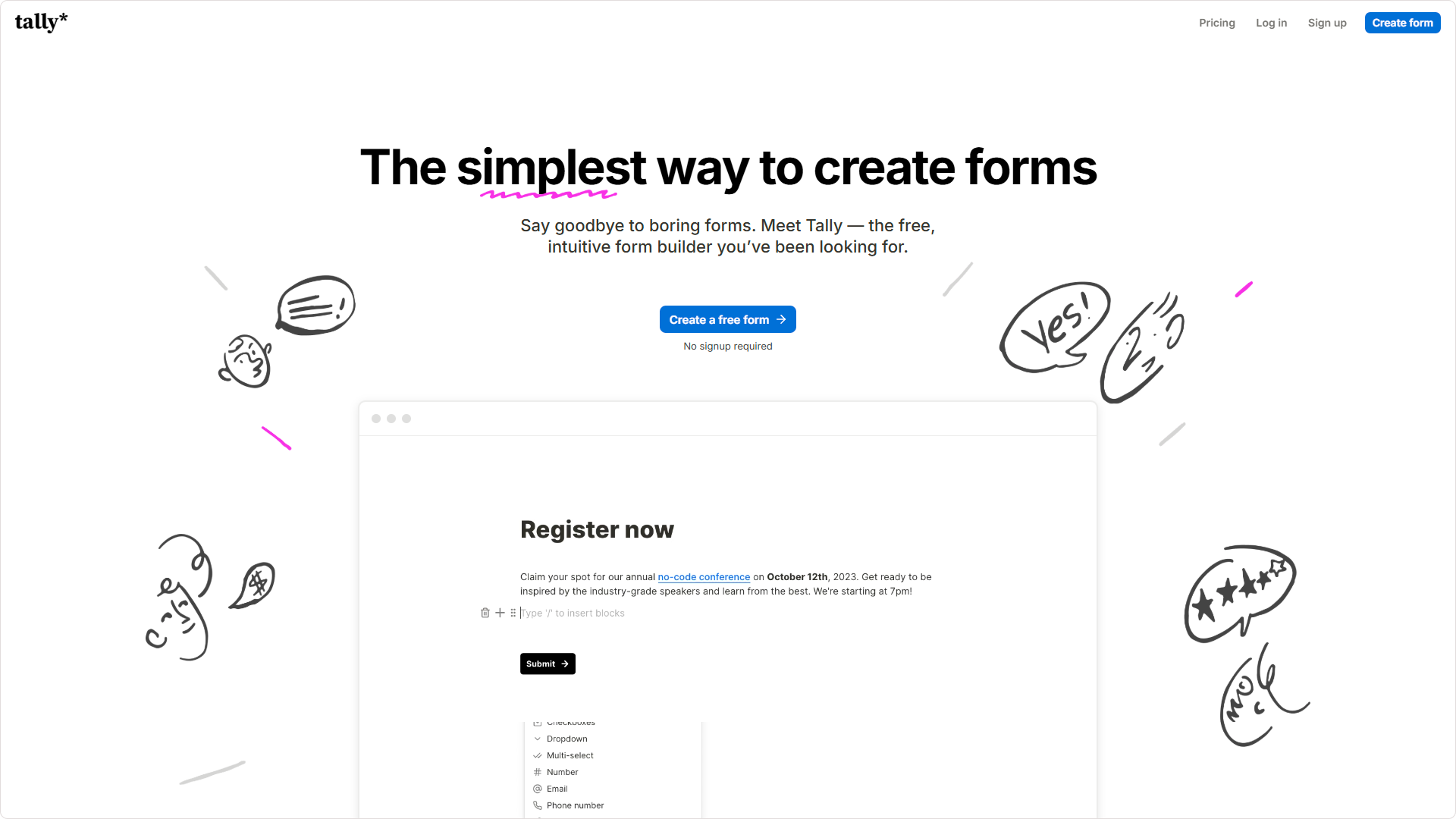
Tally appeals to creators, startups, and independent teams that prioritize publishing speed. Its writing-focused interface allows forms to be created naturally while still supporting payments, logic, signatures, and data collection.
- Ventajas
- Fast creation workflow
- Respuestas ilimitadas
- Simple editing experience
- Flat pricing structure
- Signature support
- Creator-friendly interface
- Desventajas
- Limited visual control
- Branding restrictions on free plans
- No visual logic mapping
- Fewer presentation options
- Design flexibility limitations
- Custom styling requires effort
5. forms.app : Customer-Facing Experiences with Commerce Features
Combine lead capture, registrations, product listings, payments, and bookings within modern multi-step experiences.
forms.app offers a balance between ease of use and visual presentation. Its template library, AI capabilities, payment support, and mobile-friendly experiences make it attractive for organizations running customer-facing workflows.
- Ventajas
- Multiple layout styles
- Creación asistida por IA
- Payment collection tools
- Experiencias amigables para móviles
- Product catalog support
- Digital signature capabilities
- Desventajas
- Response limits on lower plans
- Características premium restringidas
- Custom domains require upgrades
- Análisis avanzados limitados
- Enterprise ecosystem smaller
- Los costos de escalabilidad aumentan
6. Jotform : Extensive Customization Across Diverse Use Cases
Support registrations, applications, bookings, payments, and customer-facing workflows through one of the largest form ecosystems available.
Jotform is frequently chosen by organizations that want broad flexibility and extensive functionality. Its large template library, integrations, payment capabilities, and customization options support a wide variety of client-facing experiences.
- Ventajas
- Extensive template selection
- Large integration ecosystem
- Strong customization options
- Payment support
- Enterprise features
- Broad use-case coverage
- Desventajas
- Feature-heavy interface
- Learning curve
- Usage-based restrictions
- Premium plans increase costs
- Administrative complexity
- Advanced capabilities require upgrades
Recomendación final
Kiwiform: A Paperform Alternative Built for Branded Form Experiences
Create visually polished forms, applications, bookings, registrations, and lead generation experiences that reflect your brand identity while remaining flexible, scalable, and easy to manage as your requirements evolve.
Paperform is popular among teams that value presentation, customization, and customer-facing experiences. From lead generation and bookings to applications and client onboarding, organizations often choose Paperform because they want forms that feel polished and aligned with their brand identity rather than generic data collection tools. Kiwiform helps teams build branded experiences through conversational interactions, visual customization, personalization, payments, automation, and unlimited usage. Whether launching campaigns, collecting leads, processing applications, managing registrations, or supporting customer journeys, Kiwiform provides the flexibility to create experiences that are both visually engaging and operationally scalable.