Microsoft Forms Alternative for Flexible Data Collection and Modern Form Experiences
Compare leading alternatives to Microsoft Forms for customer-facing forms, registrations, applications, payments, workflow automation, and branded experiences that extend beyond traditional workplace productivity tools.
Microsoft Forms is widely used by organizations already operating within the
Microsoft 365 ecosystem. It provides a convenient way to create surveys, collect
internal feedback, run training quizzes, and gather information directly alongside
tools like Teams, Excel, and SharePoint.
As organizations expand beyond internal data collection, many begin searching for a
Microsoft Forms alternative that offers greater customization, stronger branding,
more advanced logic, payment collection, and richer user experiences. The platforms
below provide different approaches to modern form building, workflow management, and
scalable data collection.
Alternativa consigliata
1. Kiwiform : Modern Forms Without Ecosystem Restrictions
Create forms, surveys, registrations, applications, payments, and workflow-driven experiences through a platform designed to support advanced customization, automation, engagement, and unlimited growth.
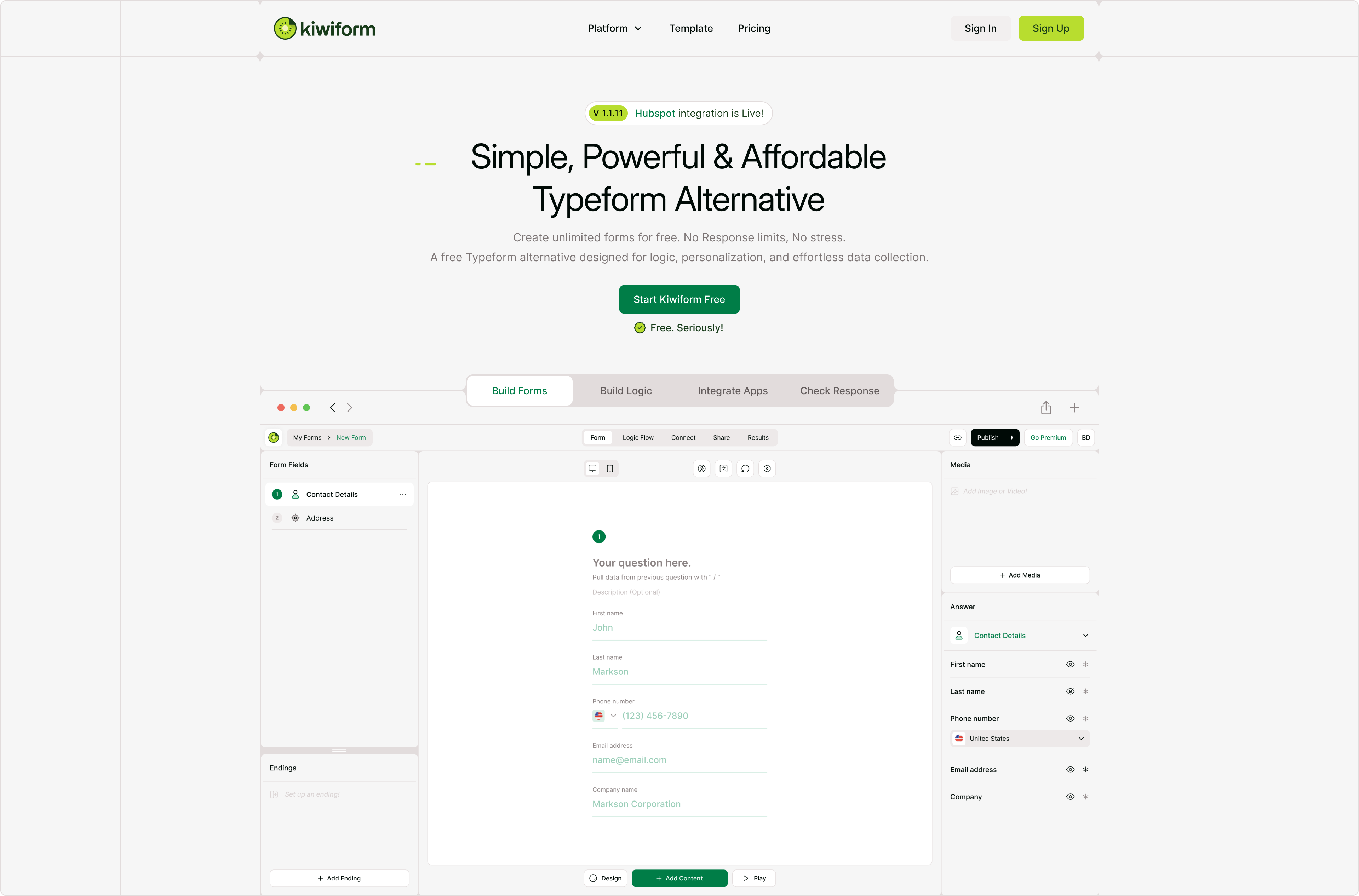
Microsoft Forms works well for internal workplace use cases, but many organizations eventually need more control over design, branding, workflows, and respondent experiences. Kiwiform provides a flexible environment where teams can create conversational forms, automate processes, personalize journeys, and collect information through experiences designed for both internal and external audiences. As a Microsoft Forms alternative, Kiwiform helps organizations move beyond productivity-suite limitations while supporting advanced logic, workflow automation, integrations, payment collection, and unlimited forms and responses. Whether collecting leads, applications, registrations, feedback, or operational requests, teams can build scalable experiences without ecosystem lock-in.
Inizia a costruire con Kiwiform- Pro
- Moduli e risposte illimitati
- Esperienze di moduli conversazionali
- Automazione avanzata dei flussi di lavoro
- Logica e ramificazione flessibili
- Assistenza AI integrata per i moduli
- Ampie opzioni di personalizzazione
- Contro
- Smaller ecosystem than Microsoft
- Newer platform community
- Advanced workflows require planning
2. Google Forms : Raccolta Dati Accessibile per Collaborazione Quotidiana
Collect responses, registrations, questionnaires, and internal feedback through a familiar platform tightly integrated with the Google Workspace ecosystem.
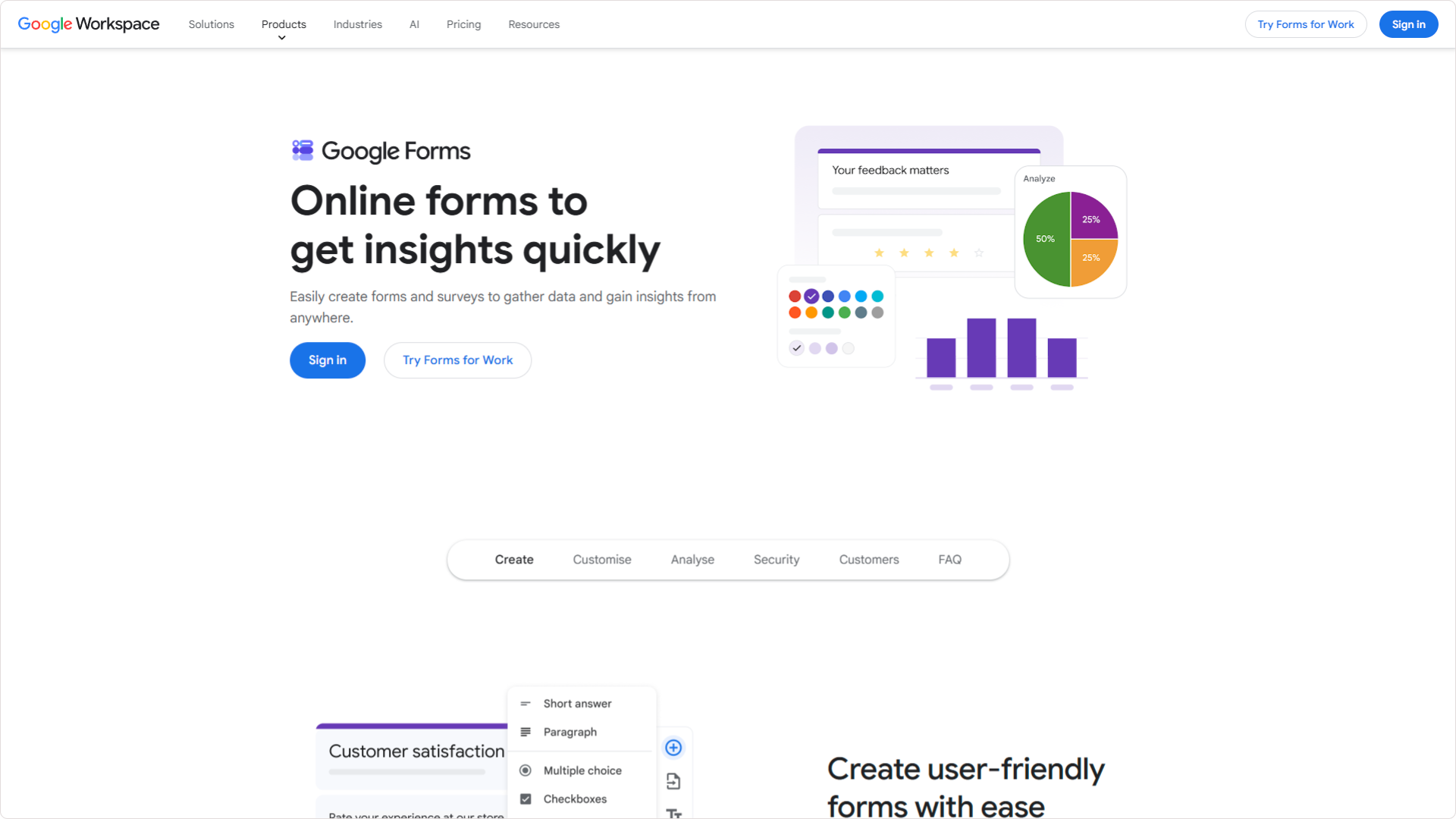
Google Forms remains one of the most popular tools for lightweight data collection because of its simplicity and accessibility. Teams can quickly create surveys, collaborate with colleagues, and manage responses through Google Sheets without significant training or setup requirements. For organizations evaluating a Microsoft Forms alternative, Google Forms often appeals to teams seeking straightforward collaboration and ease of adoption across distributed teams.
- Pro
- Gratuito da usare
- Integrazione con Google Workspace
- Collaborazione semplice
- Fast deployment
- Interfaccia familiare
- Real-time Sheets syncing
- Contro
- Personalizzazione limitata
- Basic branding controls
- Automazione dei flussi di lavoro minima
- Restricted design flexibility
- Basic analytics capabilities
- Limited advanced logic
3. Tally : Document-Style Forms for Fast Creation
Build forms through a text-first editing experience that prioritizes speed, simplicity, and efficient publishing without traditional drag-and-drop builders.
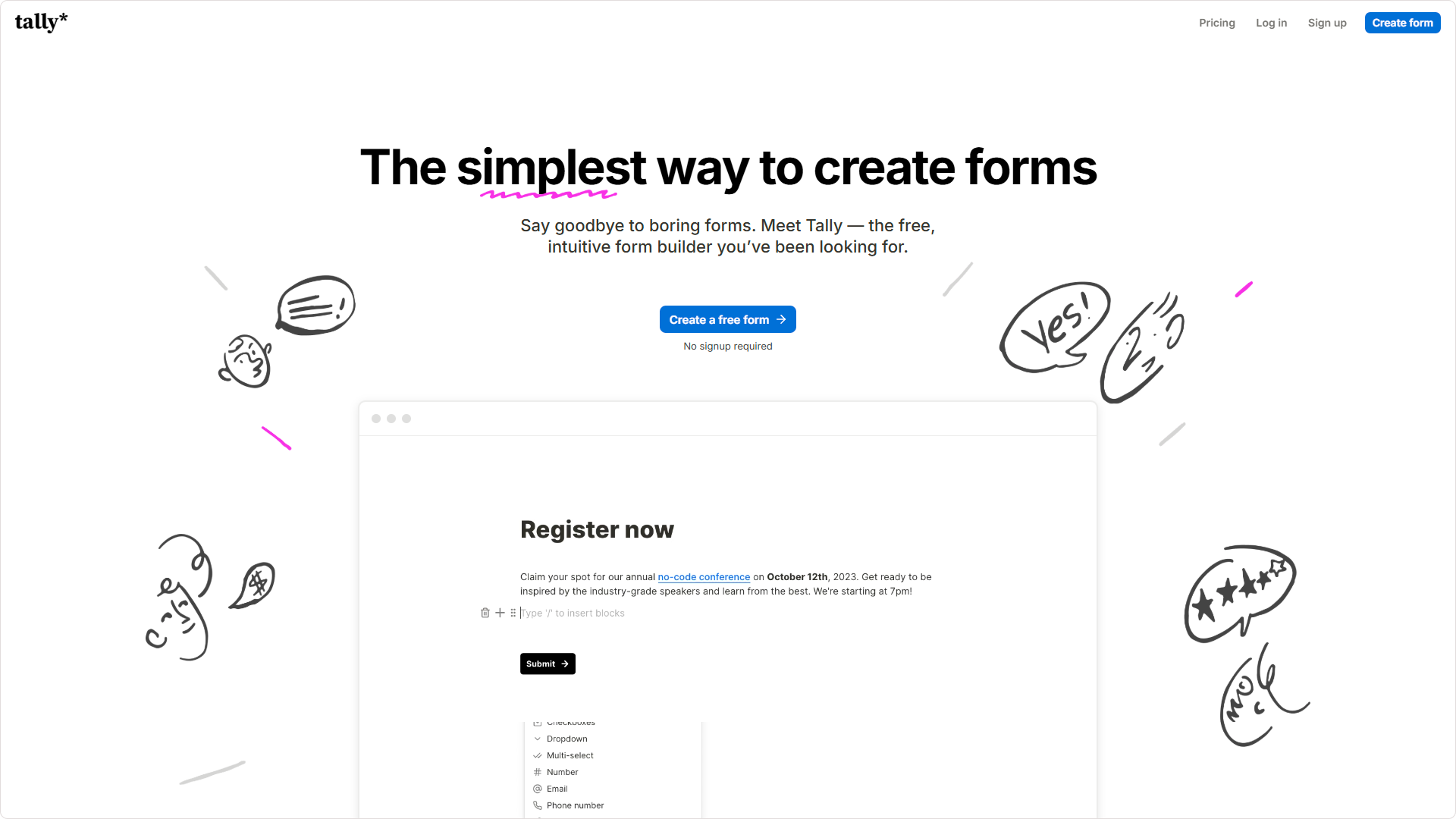
Tally approaches form creation differently by using a document-style editor that feels familiar to users of modern writing and collaboration tools. This allows creators to build forms quickly while maintaining a lightweight workflow and streamlined editing experience. As a Microsoft Forms alternative, Tally is often considered by startups, creators, and small teams that want a faster and more flexible form-building experience.
- Pro
- Document-style builder
- Risposte illimitate
- Creazione di moduli veloce
- Clean user experience
- Stripe payment support
- Affordable upgrades
- Contro
- Limited visual customization
- Branding restrictions on free plans
- Less suited for enterprise teams
- Advanced workflows require workarounds
- Smaller integration ecosystem
- Limited workflow visualization
4. Cognito Forms : Calculation-Driven Forms for Operational Processes
Create forms powered by advanced calculations, approvals, payment workflows, and structured data management for business operations.
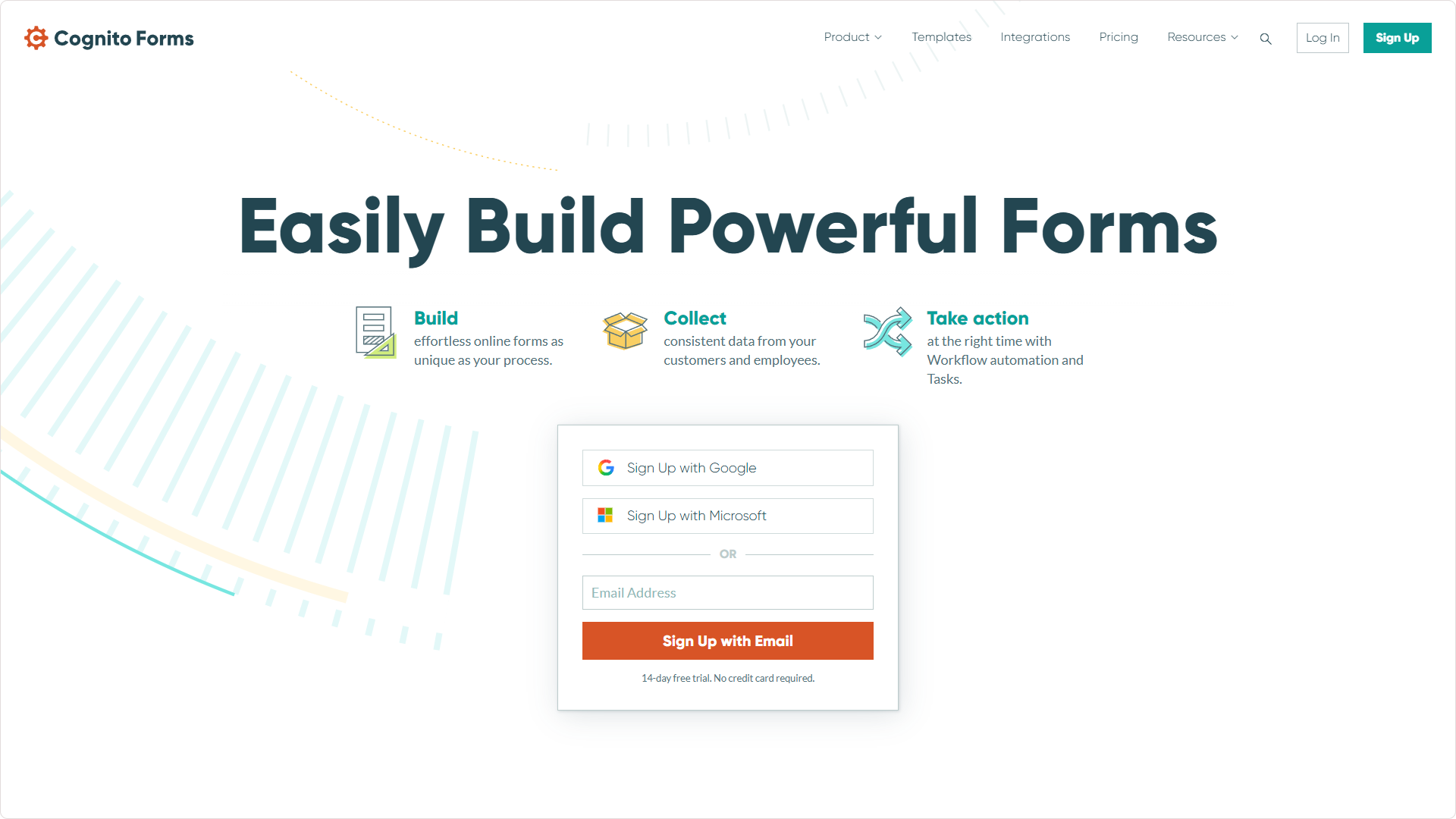
Cognito Forms is particularly strong when forms require complex calculations, pricing models, dynamic quotes, approvals, or structured operational workflows. It provides capabilities that extend beyond basic surveys and registrations. For teams evaluating a Microsoft Forms alternative, Cognito Forms is often considered when business processes require more advanced logic and calculation functionality.
- Pro
- Calcoli avanzati
- Approval workflows
- Supporto per la raccolta di pagamenti
- Strong data management
- Role-based permissions
- Workflow flexibility
- Contro
- Traditional interface design
- Learning curve for calculations
- Risposte gratuite limitate
- Esperienze meno coinvolgenti
- Complex setup for beginners
- Styling limitations
5. Formstack : Workflow Automation for Business Operations
Manage forms, approvals, documents, signatures, and enterprise workflows through a platform built around operational efficiency and process automation.
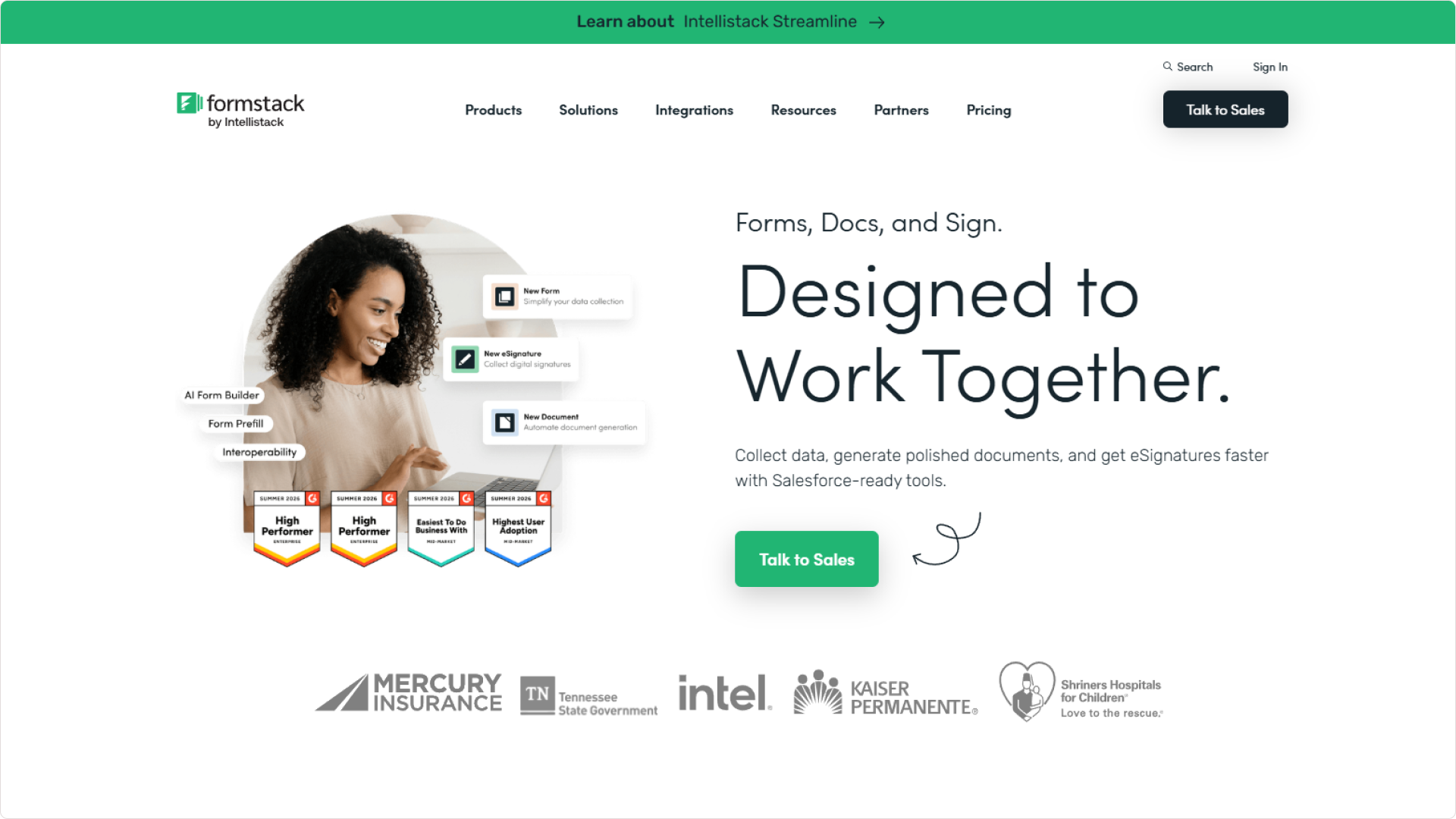
Formstack focuses heavily on workflow management, document automation, compliance processes, and enterprise data collection. Organizations frequently use it to automate approvals, generate documents, and streamline operational activities. As a Microsoft Forms alternative, Formstack appeals to teams that need workflow orchestration and document-centric processes rather than simple workplace surveys.
- Pro
- Document generation
- Digital signatures
- Automazione dei flussi di lavoro
- Compliance capabilities
- Salesforce integrations
- Enterprise security
- Contro
- Expensive pricing
- Nessun piano gratuito permanente
- Complex onboarding
- Higher administrative overhead
- Customizations require effort
- Less suitable for small teams
6. Typeform : Engagement-Focused Forms for Customer Interactions
Deliver highly interactive experiences designed to improve participation, completion rates, and customer engagement across forms, surveys, registrations, and lead generation.
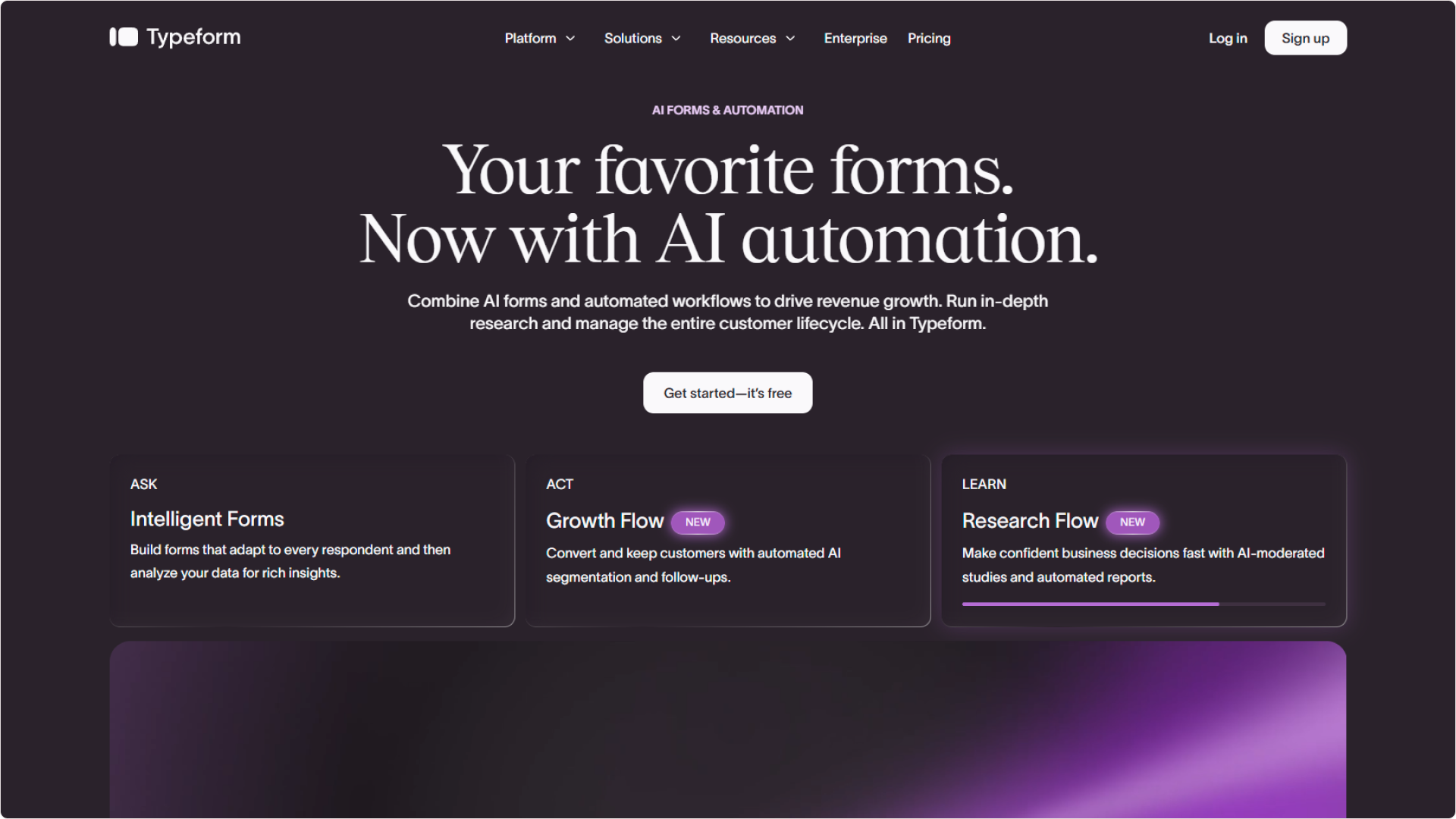
Typeform prioritizes respondent experience through conversational interfaces that present one question at a time. This approach helps organizations create more engaging interactions compared to traditional workplace form layouts. For teams seeking a Microsoft Forms alternative, Typeform is often chosen when improving customer-facing experiences is a higher priority than workplace productivity integration.
- Pro
- Interfaccia conversazionale
- Design visivo forte
- Esperienze interattive
- Ampio ecosistema di integrazione
- Creazione assistita da AI
- Ottimizzato per il coinvolgimento
- Contro
- Si applicano limiti alle risposte
- Struttura dei prezzi premium
- Possibili costi aggiuntivi
- Restrizioni sul branding
- Funzionalità avanzate riservate
- I costi di scalabilità aumentano
Raccomandazione finale
Kiwiform: A Microsoft Forms Alternative Built for Flexible Experiences and Unlimited Growth
Move beyond workplace-only data collection with a platform designed to support branded experiences, advanced workflows, conversational interactions, automation, and unlimited usage.
Microsoft Forms remains a practical solution for organizations operating within
the Microsoft ecosystem. Its strengths in internal surveys, quizzes, team
collaboration, and workplace productivity make it a useful tool for gathering
information across Microsoft 365 environments. As organizations expand
customer-facing initiatives, automate processes, and seek greater design
flexibility, many begin looking for alternatives that extend beyond the
limitations of productivity-suite form builders.
Kiwiform combines conversational experiences, advanced logic, workflow automation,
customization, integrations, payment collection, and unlimited forms and responses
within a single platform. For organizations searching for a Microsoft Forms
alternative that supports both internal operations and external engagement,
Kiwiform provides a scalable foundation for modern data collection and workflow
management.