Gravity Forms Alternative for WordPress-Integrated Website Forms
Compare leading alternatives for website forms, lead capture, registrations, applications, payments, and customer interactions without WordPress plugin dependencies.
Gravity Forms has become one of the most recognized form builders in the WordPress ecosystem. Businesses use it to create contact forms, lead capture forms, registrations, applications, payment forms, and customer workflows directly inside their websites. For organizations already operating on WordPress, Gravity Forms offers a familiar way to manage website-integrated forms without relying on external systems. Its extensive add-on ecosystem and deep WordPress compatibility have made it a long-standing choice for website owners and developers. As websites, marketing campaigns, and customer journeys become more sophisticated, many organizations begin searching for a Gravity Forms alternative that provides the benefits of website-integrated forms without plugin maintenance, hosting dependencies, WordPress updates, or theme compatibility concerns. Modern form platforms allow teams to publish forms across websites, landing pages, customer portals, and digital experiences while reducing technical overhead and improving flexibility.
推荐的替代方案
1. Kiwiform : Website-Integrated Forms with Greater Control
Create lead generation forms, registrations, applications, onboarding flows, payments, and customer-facing experiences that integrate seamlessly with websites without relying on WordPress infrastructure.
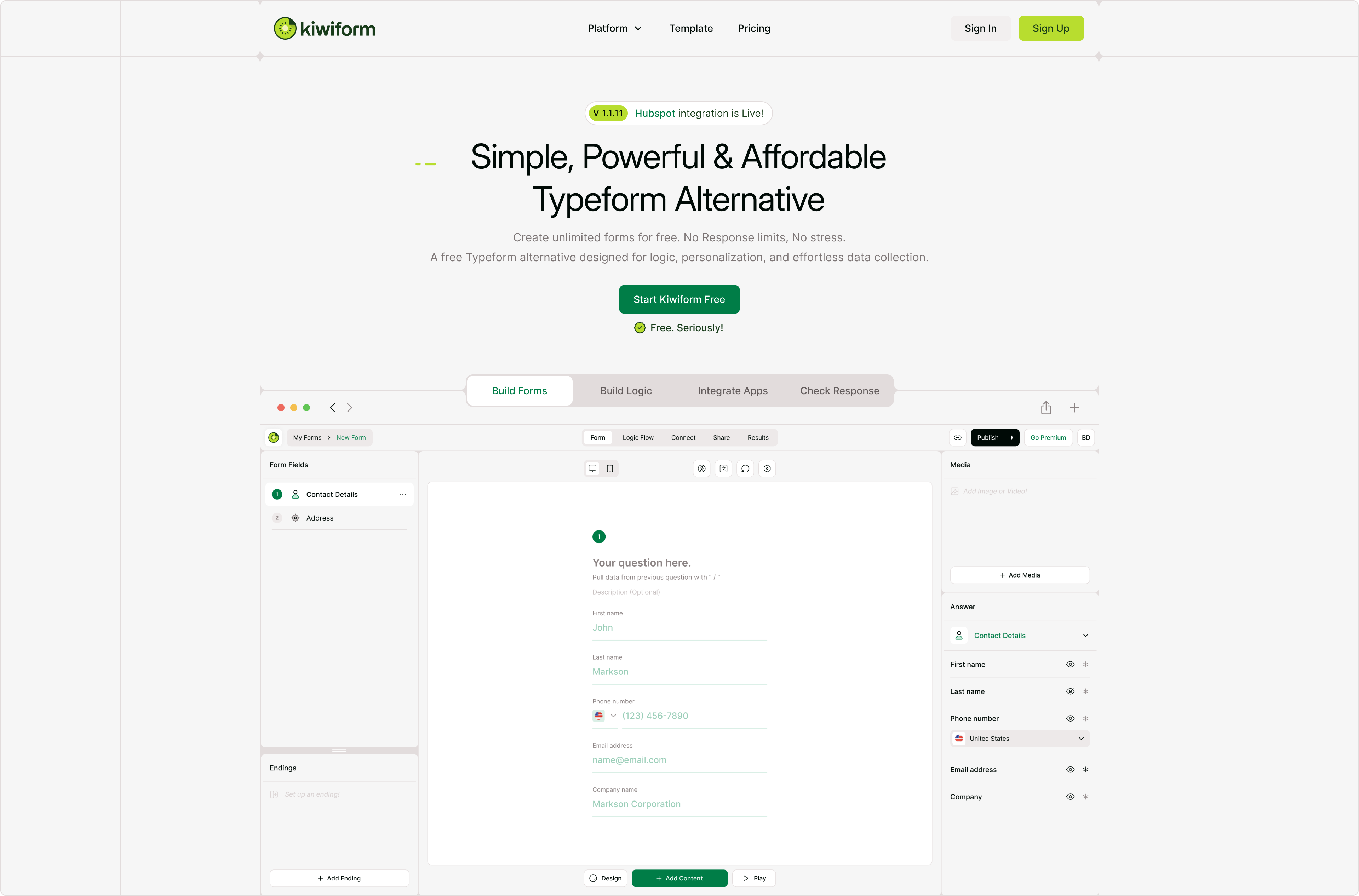
Organizations evaluating Gravity Forms alternatives often want to maintain the flexibility of website-integrated forms while reducing the complexity that comes with plugin-based systems. Kiwiform provides a hosted platform that allows businesses to build, customize, and publish forms across websites without managing WordPress plugins, server resources, theme conflicts, or ongoing software updates. Teams can create branded experiences, personalize user journeys, automate actions, and collect information through a platform designed for both simplicity and scalability. As a Gravity Forms alternative, Kiwiform combines conversational forms, visual logic building, automation, payments, integrations, and customization within a single environment. Organizations can publish forms on WordPress websites, landing pages, Webflow projects, Framer sites, Shopify stores, and other digital properties while benefiting from unlimited forms and unlimited responses. Combined with Kiwizard, the AI Form Builder inside Kiwiform, teams can quickly transform ideas into fully functional website forms without sacrificing control or flexibility.
开始使用 Kiwiform 构建- 优点
- Unlimited forms
- 无限响应
- Kiwizard AI表单构建器
- 对话式表单体验
- Visual conditional logic builder
- Works across any website platform
- 缺点
- Smaller ecosystem than older vendors
- Fewer legacy integrations than established platforms
- Some advanced workflows may require setup
2. Jotform : Hosted Website Forms with Enterprise-Level Flexibility
Manage website forms, registrations, approvals, applications, and payments through a hosted platform that removes WordPress plugin dependencies.
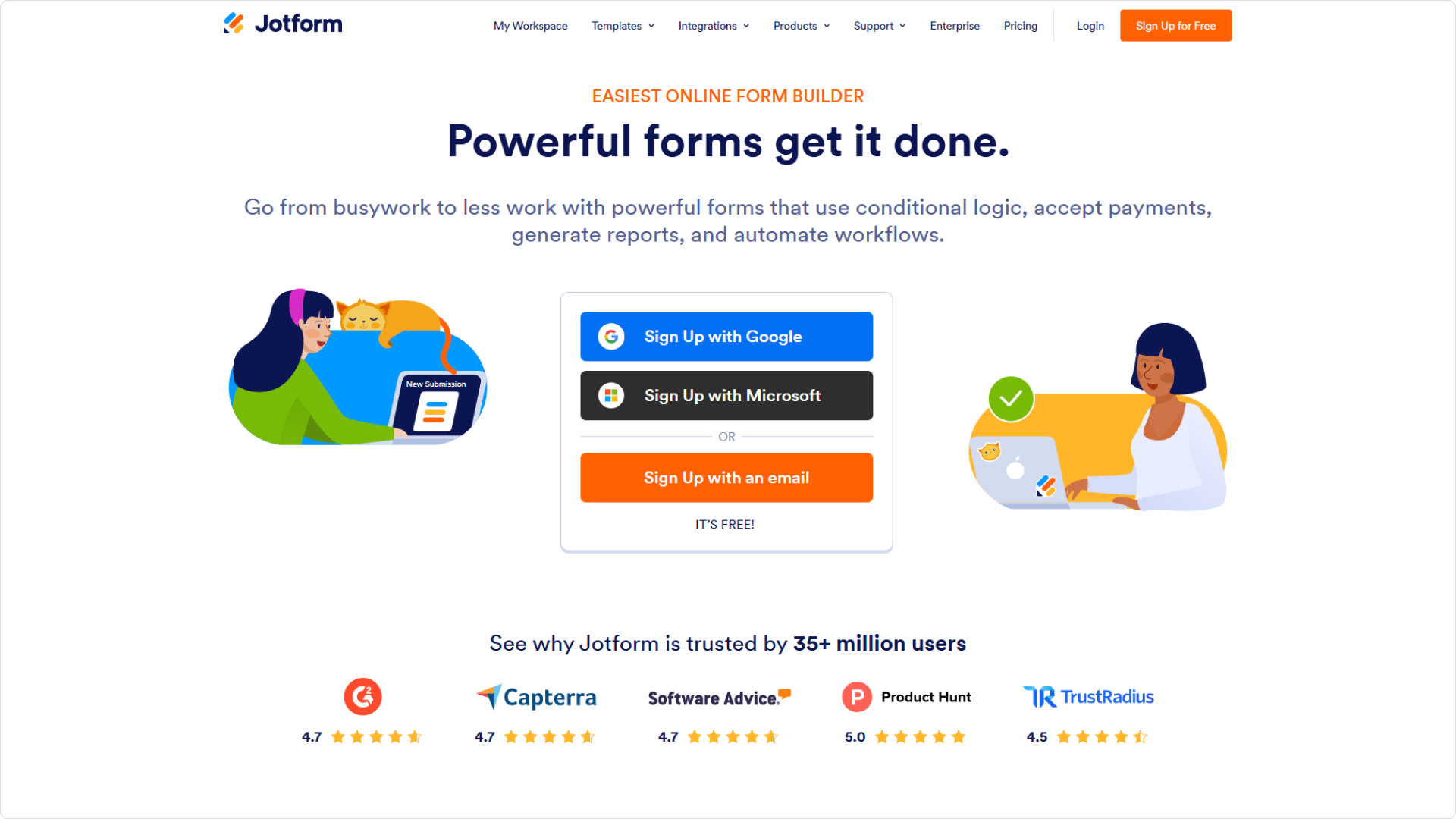
Jotform is frequently selected by organizations that want advanced website forms without relying on WordPress-specific infrastructure. The platform offers thousands of templates, approval workflows, payment processing, document generation, integrations, and compliance capabilities that help businesses manage a wide variety of form-driven processes. For teams seeking flexibility across multiple websites and departments, Jotform provides a comprehensive hosted solution. Its extensive functionality is both a strength and a challenge. Organizations often encounter a steeper learning curve, more complex administration, and increasing costs as form usage and submission volumes grow.
- 优点
- Extensive template library
- Large integration ecosystem
- Approval workflows
- Multiple payment options
- Strong compliance capabilities
- Advanced submission management
- 缺点
- Complex interface
- Steeper learning curve
- Limited free plan
- Costs increase with usage
- Administrative overhead
- Premium features require upgrades
3. Typeform : Conversational Website Forms Beyond WordPress
Turn traditional website forms into engaging conversational experiences that prioritize user interaction and completion rates.
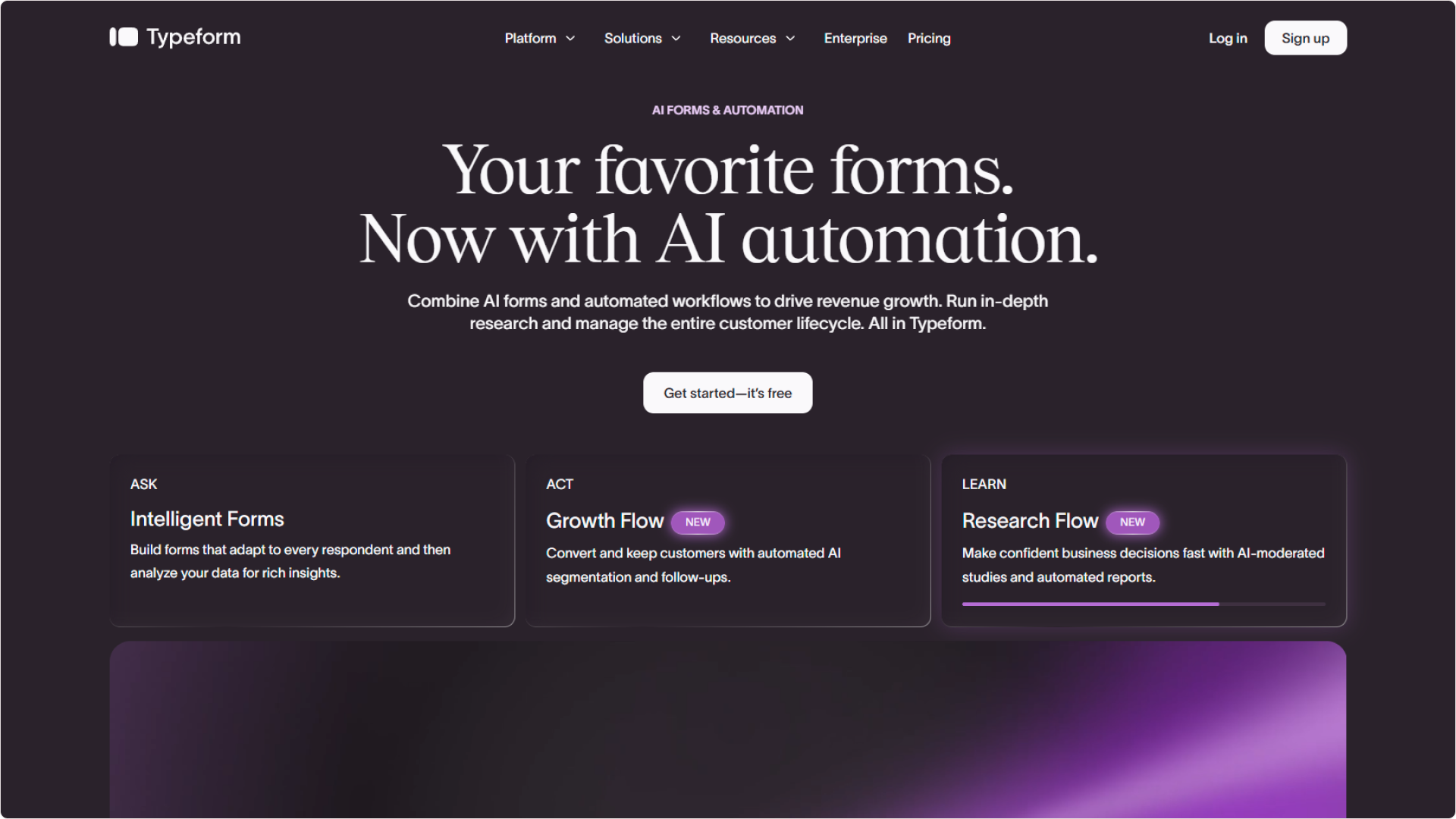
Typeform approaches website-integrated forms differently by focusing on conversational experiences rather than traditional layouts. Businesses commonly use Typeform for lead generation, applications, registrations, onboarding flows, and customer engagement campaigns where presentation and interaction play an important role. Its polished interface and question-by-question format help create more engaging experiences for respondents. While Typeform excels at engagement, many organizations eventually explore alternatives due to response limits, premium pricing, and scaling costs. Businesses looking for website forms that can support larger volumes often seek more flexible options.
- 优点
- Conversational user experience
- 强大的视觉呈现
- 互动逻辑构建器
- Premium templates
- Large integration ecosystem
- AI-assisted creation tools
- 缺点
- Expensive at scale
- Strict response limits
- Limited free usage
- 高级功能受限
- Costs increase quickly
- Overage charges can become expensive
4. Tally : Fast Website Form Publishing Without WordPress Plugins
Create and publish website forms through a lightweight document-style editing experience designed for speed and simplicity.
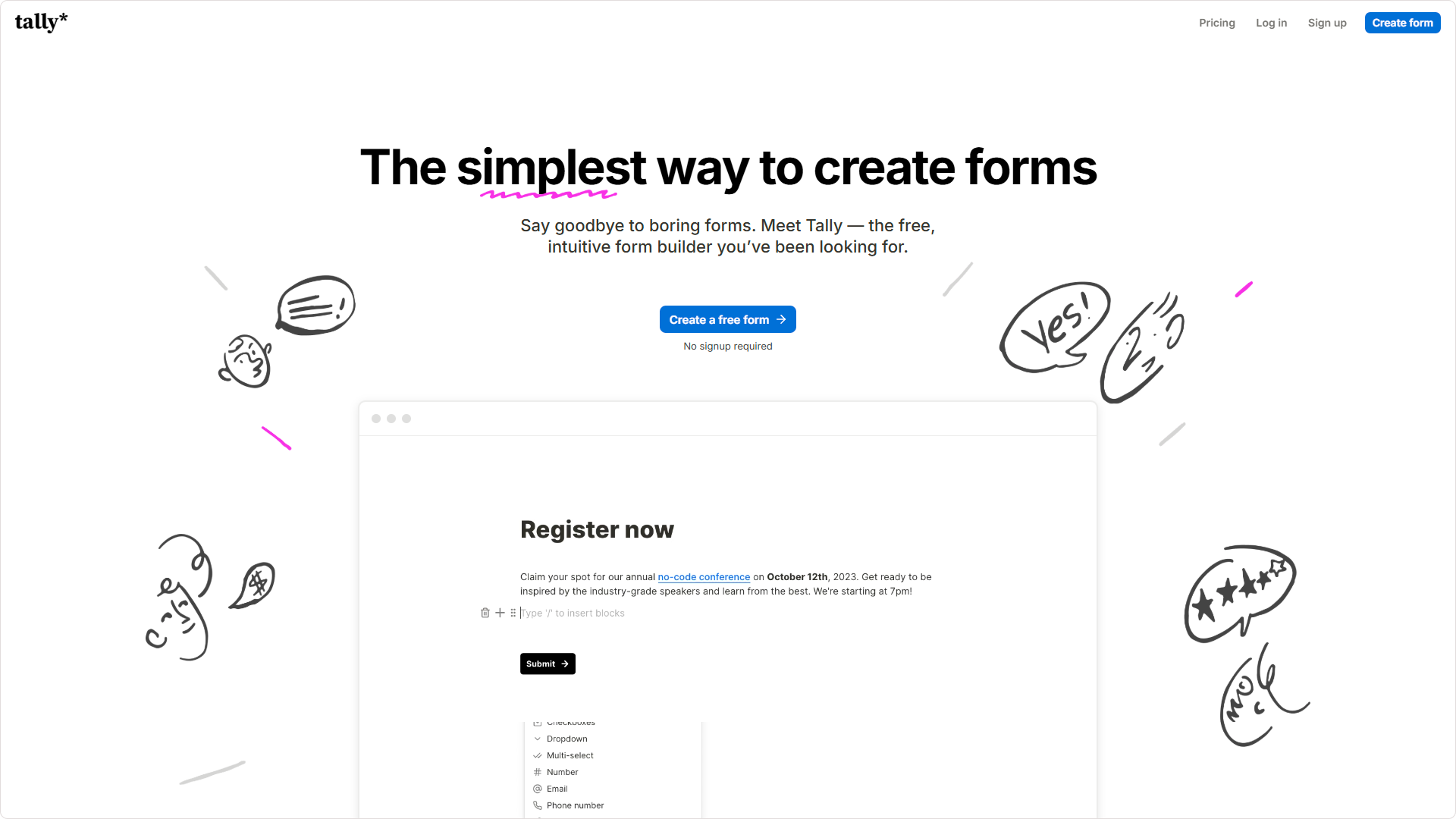
Tally has gained popularity among startups, freelancers, creators, and small businesses because of its straightforward approach to form creation. Instead of managing forms through WordPress plugins or traditional builders, users create forms directly within a document-style editor. This allows teams to launch forms quickly while supporting payments, signatures, conditional logic, and calculations. Although Tally is highly effective for lightweight website forms, organizations seeking advanced branding, visual workflow management, or deeper customization may eventually require a more sophisticated platform.
- 优点
- Simple editing experience
- Unlimited forms
- 无限响应
- Quick learning curve
- Flat pricing structure
- 数字签名支持
- 缺点
- Limited visual customization
- Branding removal requires upgrades
- No visual logic mapping
- Custom styling often requires CSS
- Fewer advanced workflow features
- Limited presentation flexibility
5. forms.app : Flexible Website-Integrated Forms for Diverse Use Cases
Build registrations, payments, lead capture workflows, product forms, and customer interactions through a flexible hosted platform.
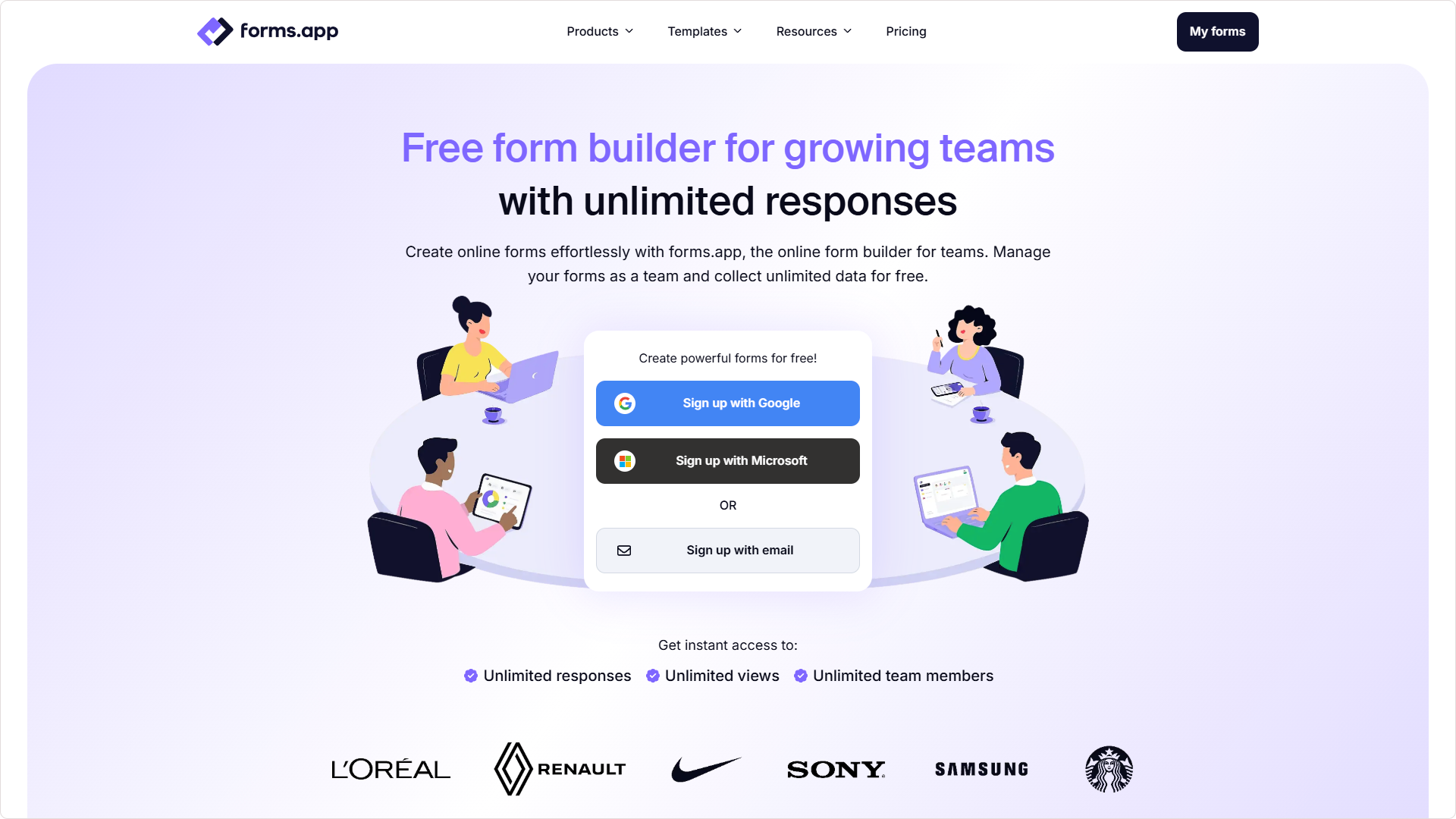
forms.app appeals to organizations that want flexibility in how forms are presented and used across websites. Businesses can create traditional forms, conversational experiences, product catalogs, registrations, applications, and payment forms while benefiting from a hosted infrastructure that eliminates the need for WordPress plugin management. This versatility makes forms.app a popular choice for businesses handling a variety of customer-facing workflows. As requirements become more advanced, some organizations encounter limitations related to usage tiers, premium features, and long-term scalability, prompting them to evaluate additional alternatives.
- 优点
- Multiple layout options
- AI 辅助创建
- Product catalog support
- Payment collection tools
- PDF generation features
- 保存和恢复功能
- 缺点
- Response limits on lower plans
- Premium branding controls
- Custom domains require upgrades
- 有限的高级分析
- Smaller enterprise ecosystem
- Scaling costs increase over time
6. Cognito表单 : Website-Integrated Forms for Structured Business Processes
Build website forms that support calculations, approvals, pricing models, and operational workflows beyond basic information collection.
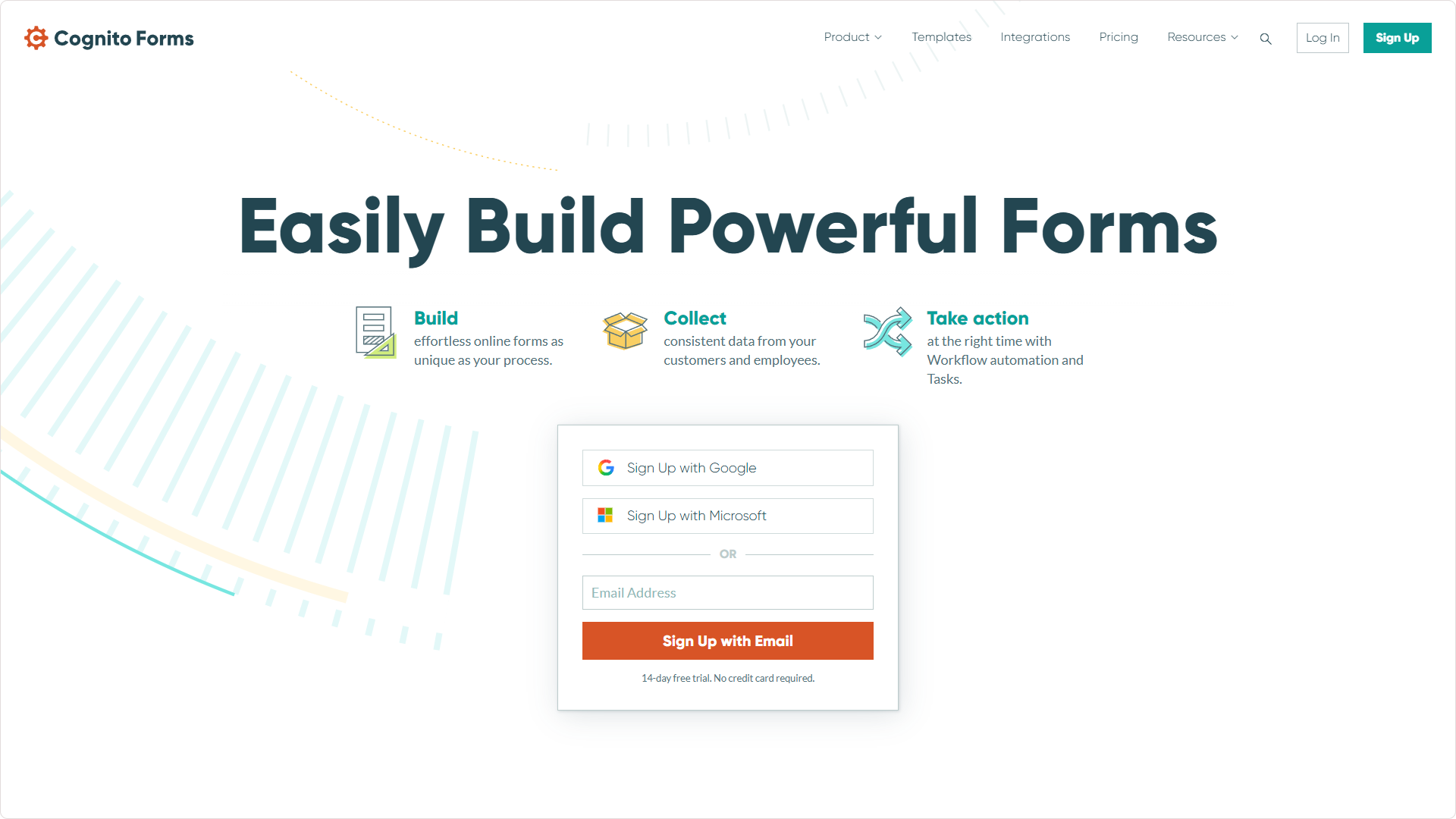
Cognito Forms is often selected by organizations that need more than simple website forms. The platform supports calculations, approvals, repeating sections, dynamic pricing, and operational workflows that directly influence business processes. Teams commonly use Cognito Forms for applications, quotes, service requests, registrations, and structured data collection where form submissions drive downstream actions. Its strengths are rooted in operational functionality rather than user experience. Businesses prioritizing customer-facing interactions, modern design, or engagement often evaluate alternative platforms.
- 优点
- 高级计算
- Dynamic pricing support
- Approval workflows
- Repeating sections
- Payment integrations
- Strong data management tools
- 缺点
- Less modern user experience
- Formula learning curve
- 有限的免费提交
- Design customization restrictions
- More operational than customer-facing
- Interface feels dated compared to newer tools
最终推荐
Kiwiform: A Gravity Forms Alternative for Flexible Website-Integrated Forms
Create website-integrated forms, lead capture experiences, registrations, applications, payments, and customer journeys without relying on WordPress plugins, hosting dependencies, or ongoing platform maintenance.
Gravity Forms remains a popular solution for organizations that need forms integrated directly into WordPress websites. Its plugin-based architecture allows businesses to manage lead capture, registrations, applications, payments, and customer interactions without leaving the WordPress environment. However, as organizations scale, managing plugins, updates, hosting resources, theme compatibility, and WordPress-specific infrastructure can introduce complexity that slows teams down. Kiwiform delivers the flexibility organizations expect from website-integrated forms while removing WordPress-specific limitations. Teams can publish lead capture forms, registrations, applications, onboarding flows, payment forms, and customer experiences across websites, landing pages, and digital properties without relying on plugins or server maintenance. Combined with conversational experiences, visual logic building, automation, integrations, customization, Kiwizard AI, unlimited forms, and unlimited responses, Kiwiform provides a modern alternative for businesses that want website forms without WordPress constraints.