Cognito Forms Alternative for Advanced Workflows and Dynamic Data Collection
Compare leading alternatives to Cognito Forms for calculations, approvals, registrations, payment collection, workflow automation, and modern form experiences designed to support growing organizations.
Cognito Forms is widely used by organizations that need more than basic forms. Its
support for calculations, conditional logic, repeating sections, payment processing,
and approval workflows makes it a popular choice for registrations, estimates,
applications, internal requests, and operational processes. For many teams, it
serves as a practical solution for collecting and processing structured business
data.
As organizations expand, many begin searching for a Cognito Forms alternative that
provides more engaging user experiences, greater customization, easier workflow
management, and additional flexibility for customer-facing interactions. The
platforms below offer different approaches to managing complex data collection while
supporting modern business requirements.
Recommended Alternative
1. Kiwiform : Advanced Workflows Without Formula-Driven Complexity
Build applications, registrations, approvals, payments, and workflow-driven experiences through a platform designed to combine advanced logic, conversational interactions, automation, and unlimited growth.
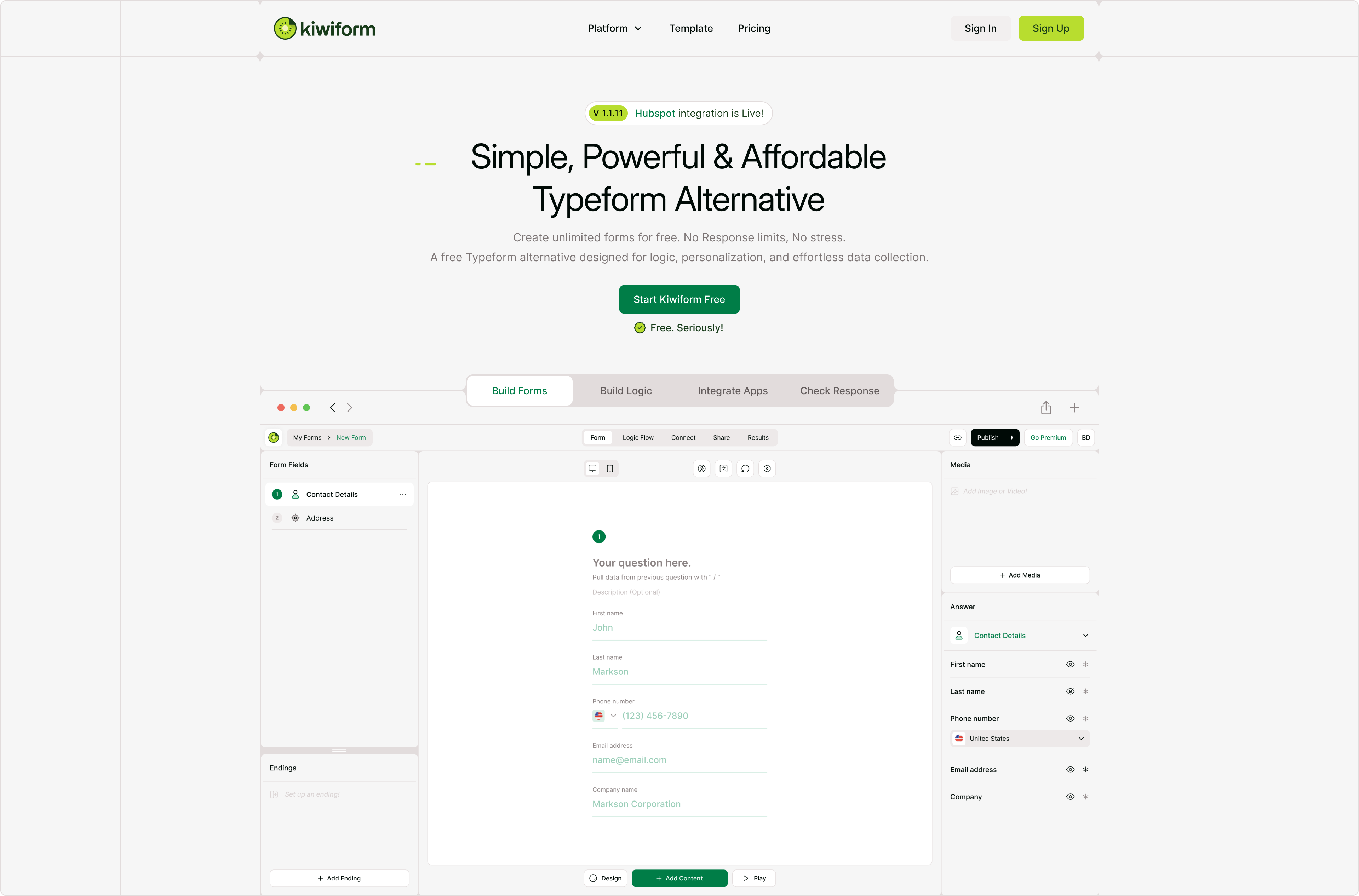
Cognito Forms is often chosen because of its powerful calculations and structured workflow capabilities. Kiwiform takes a broader approach by helping organizations build complete data collection experiences that balance workflow flexibility with respondent engagement. Through conversational forms, advanced logic, workflow automation, personalization, and integrations, teams can create experiences that feel intuitive while still supporting sophisticated business requirements. As a Cognito Forms alternative, Kiwiform is designed for organizations that need powerful workflows without relying heavily on spreadsheet-style interfaces or complex formula management. Whether collecting applications, processing registrations, managing approvals, gathering operational data, or accepting payments, teams can scale confidently with unlimited forms and unlimited responses.
Start Building with Kiwiform- Pros
- Unlimited forms and responses
- Conversational form experiences
- Advanced workflow automation
- Flexible logic and branching
- Built-in AI form assistance
- Extensive customization options
- Cons
- Smaller ecosystem than legacy platforms
- Advanced workflows require planning
- Newer platform community
2. Jotform : Operational Forms for Business Process Management
Support approvals, registrations, document collection, payments, and operational workflows through a platform designed for organizations managing diverse business processes.
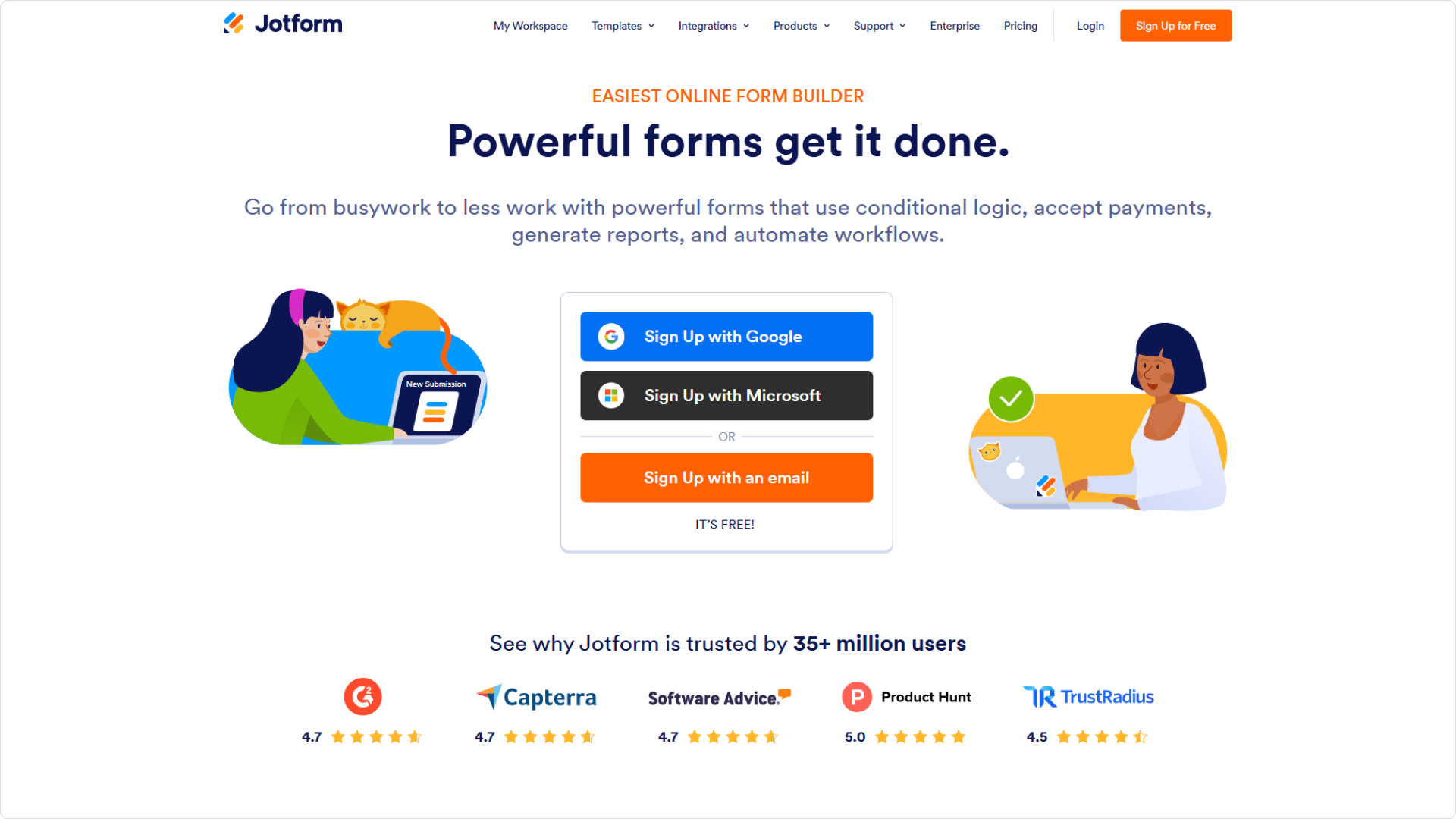
Jotform is frequently used by businesses that require a broad set of workflow tools and integrations. Its extensive template library, approval capabilities, payment processing options, and operational features make it suitable for organizations handling complex business requirements across multiple departments. For teams evaluating a Cognito Forms alternative, Jotform offers a wider operational ecosystem and a large collection of prebuilt solutions for common business workflows.
- Pros
- Extensive template library
- Workflow automation tools
- Strong payment support
- Broad integrations
- Approval routing features
- Enterprise-ready capabilities
- Cons
- Complex interface
- Higher learning curve
- Usage limits vary by plan
- Premium plans cost more
- Large feature footprint
- Administrative overheadss
3. Formstack : Process Automation for Compliance-Driven Organizations
Manage approvals, document generation, signatures, and workflow automation through a platform focused on operational efficiency and compliance-sensitive processes.
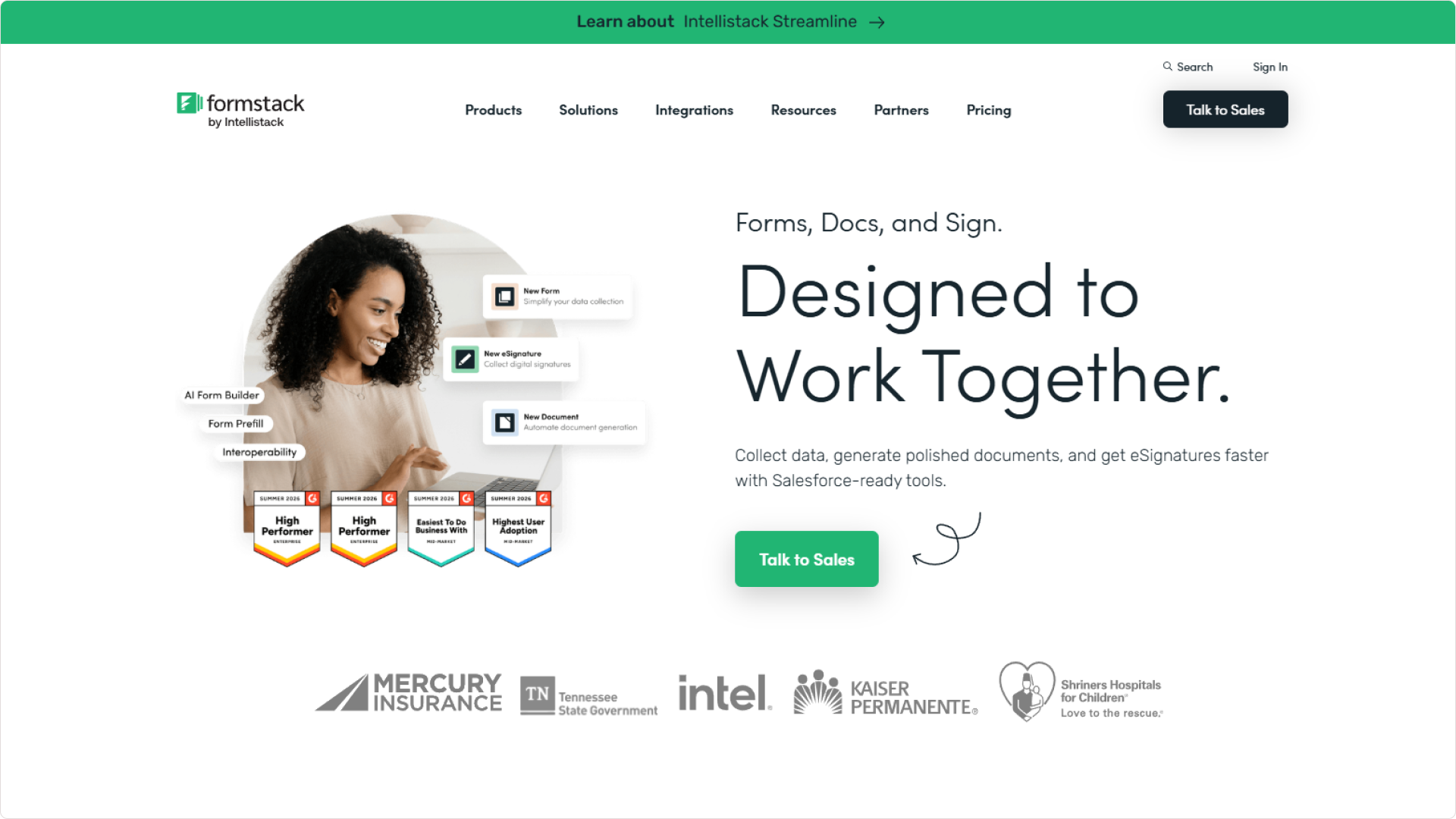
TFormstack is commonly used by organizations that need structured workflow automation combined with document management and compliance controls. It helps teams automate internal processes while reducing manual administrative work. As a Cognito Forms alternative, Formstack appeals to organizations where workflows extend beyond form submissions and require document generation, approvals, and secure data handling.
- Pros
- Document automation
- Digital signature support
- Workflow management
- Compliance capabilities
- Enterprise security features
- Salesforce integration
- Cons
- Expensive pricing structure
- No permanent free plan
- Complex implementation
- Higher administrative overhead
- Advanced features gated
- Less suitable for small teams
4. Paperform : Calculations Combined with Rich Customer Experiences
Create branded forms, estimates, bookings, and payment experiences that blend advanced calculations with highly customizable layouts and content.
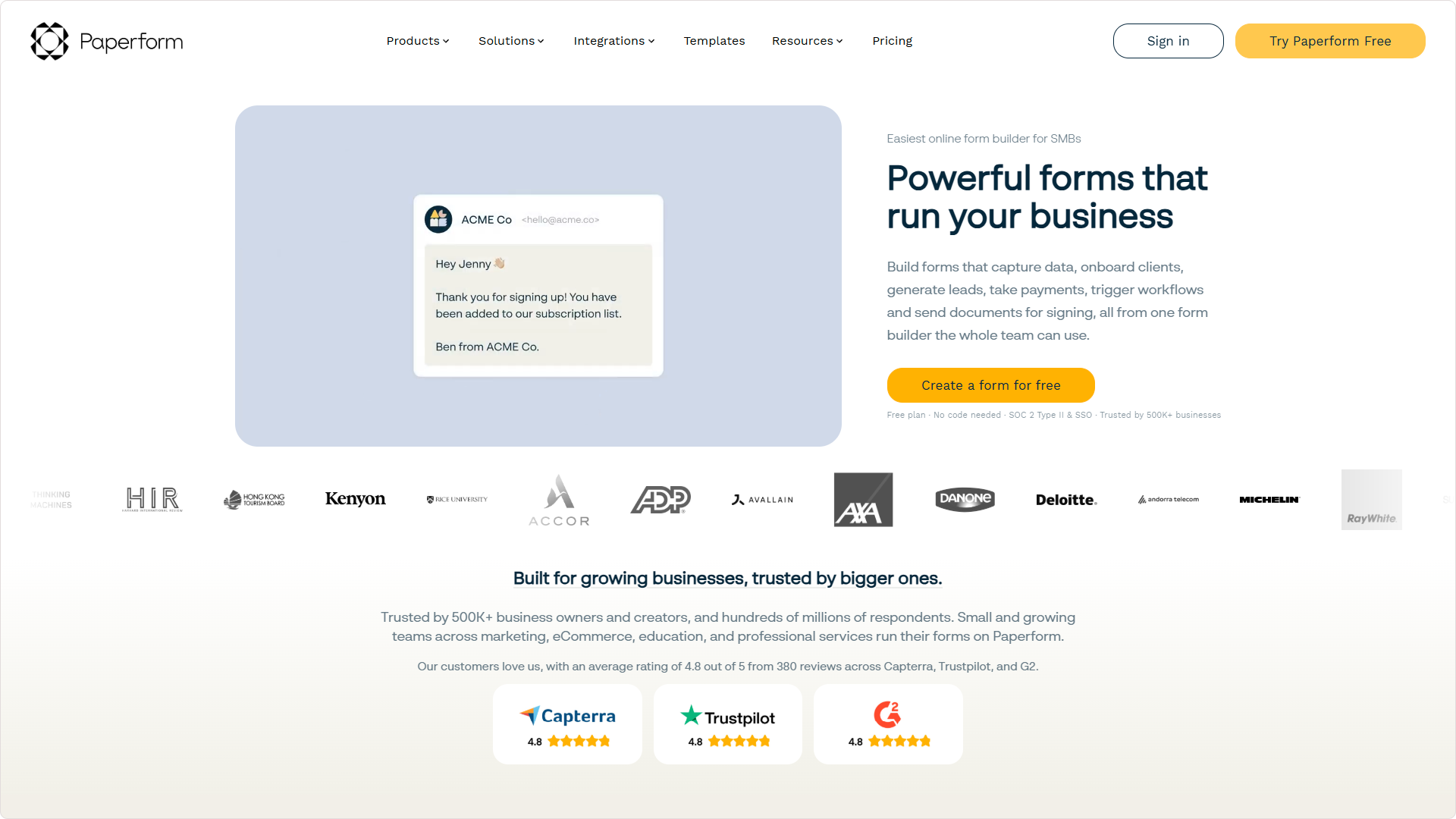
Paperform combines form building with content presentation, allowing organizations to create customer-facing experiences that feel closer to landing pages than traditional forms. It supports calculations, bookings, payments, and dynamic workflows while providing significant control over design and branding. For users searching for a Cognito Forms alternative, Paperform is often attractive when customer experience and visual presentation are just as important as workflow functionality.
- Pros
- Advanced calculations
- Strong branding control
- Rich content layouts
- Booking functionality
- Payment collection support
- Flexible design customization
- Cons
- No permanent free plan
- Higher subscription costs
- Submission limits apply
- Learning curve for layouts
- Team features cost more
- Storage limits by plan
5. Tally : Lightweight Workflow Creation Through Document-Style Editing
Build forms using a Notion-inspired editor that simplifies form creation while supporting logic, payments, signatures, and modern publishing workflows.
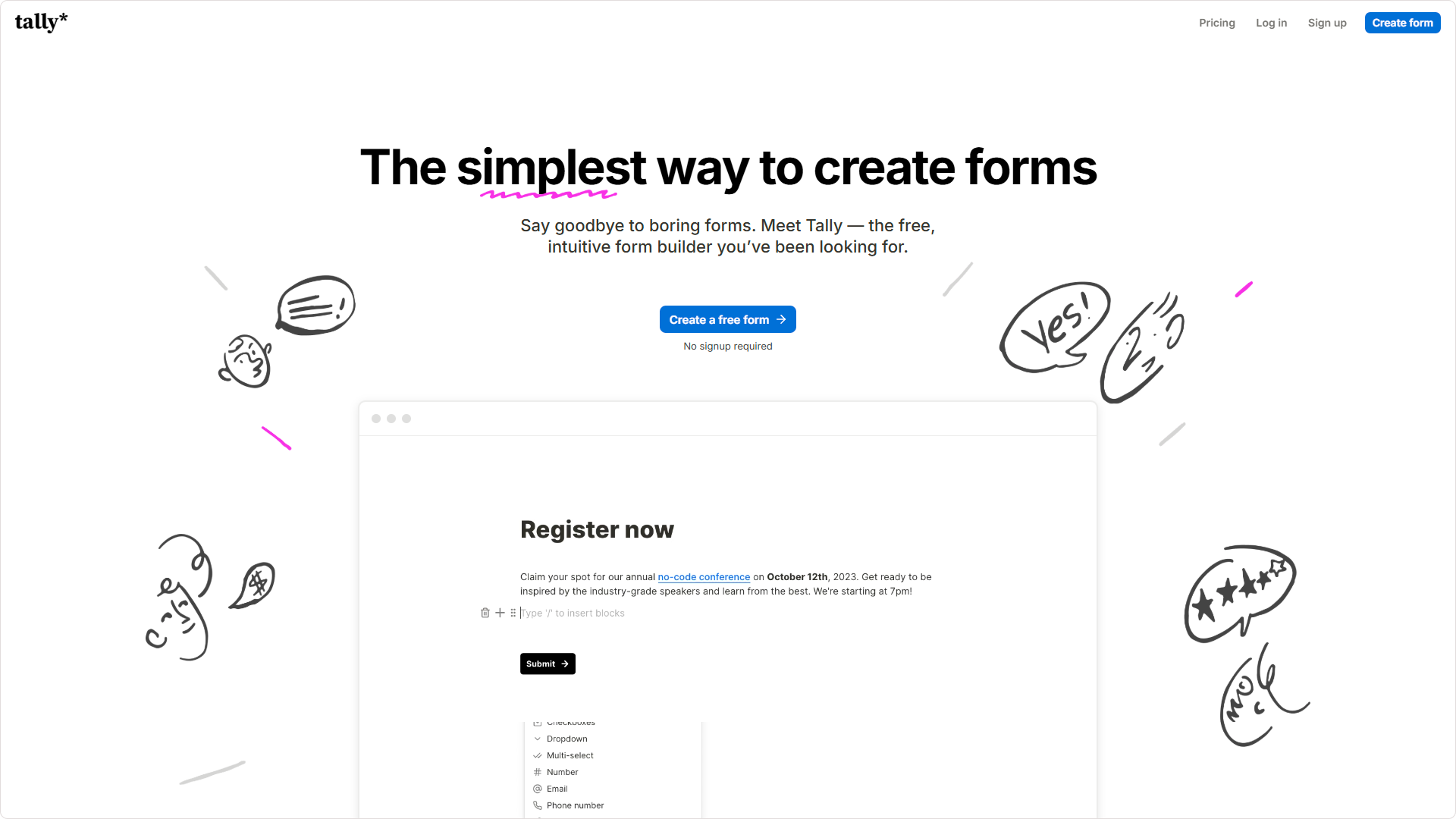
Tally approaches workflow creation differently by replacing traditional builders with a document-style editing experience. Users can create forms quickly through slash commands and text-based editing while still supporting payments, conditional logic, and integrations. As a Cognito Forms alternative, Tally is often chosen by startups and creators seeking a simpler workflow-building experience without the complexity of heavily structured form systems.
- Pros
- Document-style builder
- Unlimited responses
- Fast form creation
- Simple pricing model
- Payment support
- Signature collection
- Cons
- Limited workflow visualization
- Restricted advanced calculations
- Fewer operational features
- Design flexibility limitations
- Smaller integration ecosystem
- Less suitable for enterprise processes
6. Typeform : Customer-Facing Forms Designed for Engagement
Deliver interactive one-question-at-a-time experiences that improve participation, completion rates, and user engagement across applications, registrations, and lead generation workflows.
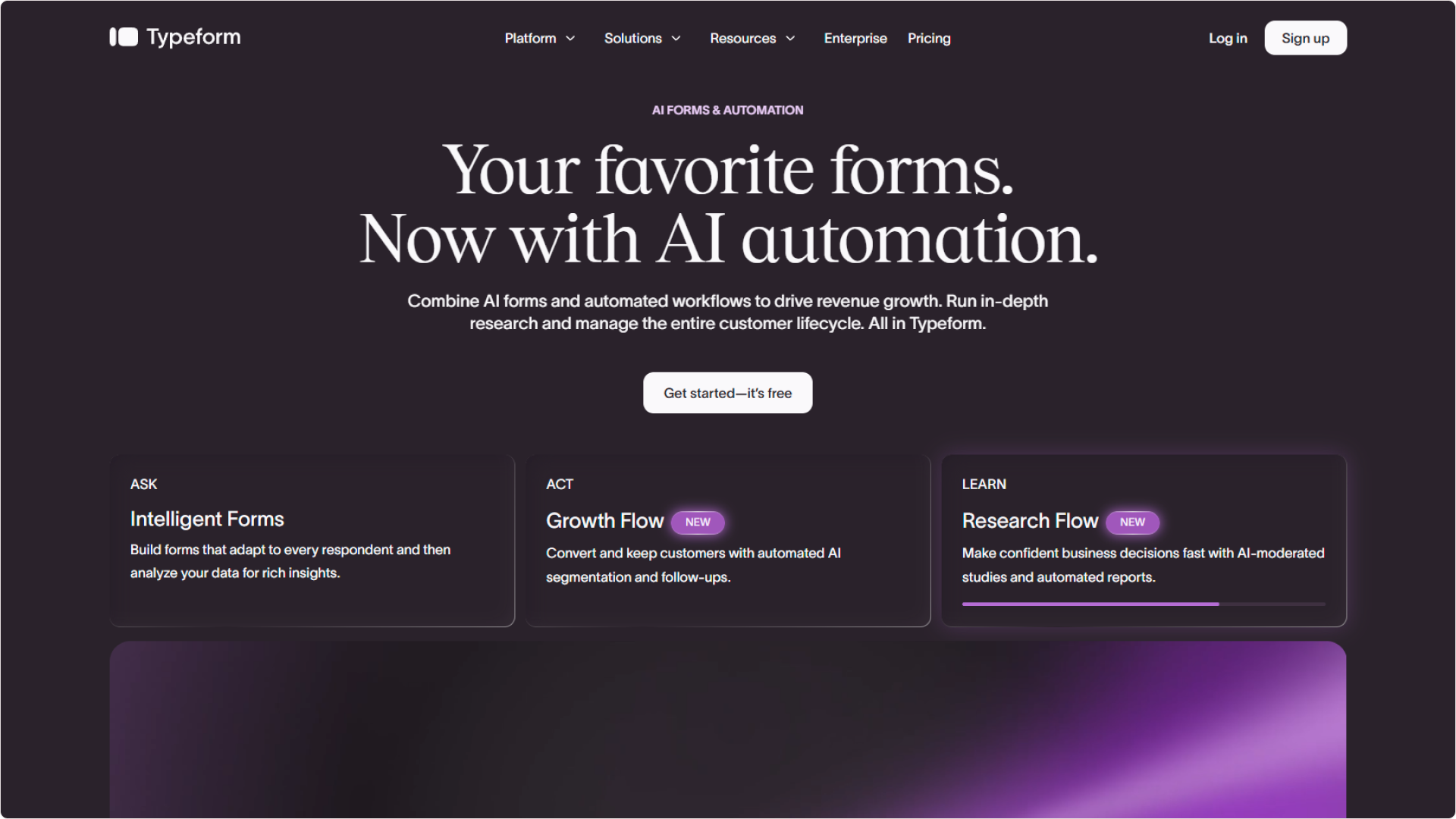
Typeform focuses on respondent experience rather than operational workflow depth. Its conversational interface helps organizations create more engaging experiences that feel significantly different from traditional business forms. For organizations evaluating a Cognito Forms alternative, Typeform is often considered when customer-facing experiences become more important than advanced calculations and backend process management.
- Pros
- Conversational interface
- Strong visual design
- Interactive experiences
- Broad integration
- AI-assisted creation
- Optimized for engagement
- Cons
- Response limits apply
- Premium pricing structure
- Overage charges possible
- Branding restrictions
- Advanced features gated
- Scaling becomes expensive
Final Recommendation
Kiwiform: A Cognito Forms Alternative Built for Flexible Workflows and Modern Experiences
Move beyond formula-heavy form building with a platform designed to support conversational interactions, advanced logic, workflow automation, customization, and unlimited data collection.
Cognito Forms remains a capable solution for organizations managing calculations,
registrations, approvals, payment processing, and structured operational
workflows. Its strength lies in handling complex business logic and data
collection requirements that go beyond basic forms. As organizations grow,
however, many seek platforms that balance workflow sophistication with better user
experiences, easier customization, and greater flexibility for both internal and
customer-facing interactions.
Kiwiform combines advanced logic, conversational experiences, workflow automation,
customization, integrations, payment collection, and unlimited usage within a
single platform. For organizations searching for a Cognito Forms alternative that
supports both complex workflows and modern respondent experiences, Kiwiform
provides a scalable foundation for collecting, managing, and acting on
business-critical data.