SurveyMonkey Alternative for Feedback, Research, and Audience Insights
Compare leading alternatives to SurveyMonkey for customer feedback, market research, employee engagement, satisfaction measurement, and modern survey experiences designed to support growing organizations.
SurveyMonkey has long been one of the most recognized platforms for collecting
feedback, conducting research, measuring satisfaction, and understanding audience
sentiment. Organizations use it to run customer surveys, employee engagement
programs, market research initiatives, and feedback campaigns that help guide
decision-making across teams.
As feedback programs grow, organizations often begin searching for a SurveyMonkey
alternative that offers greater flexibility, improved respondent experiences,
advanced customization, stronger workflow capabilities, or more scalable data
collection. The platforms below represent different approaches to collecting,
managing, and acting on valuable feedback and research data.
Recommended Alternative
1. Kiwiform : Feedback Collection Built for Modern Engagement
Create surveys, feedback programs, research questionnaires, and satisfaction studies through conversational experiences that improve engagement while supporting advanced logic, automation, and unlimited growth.
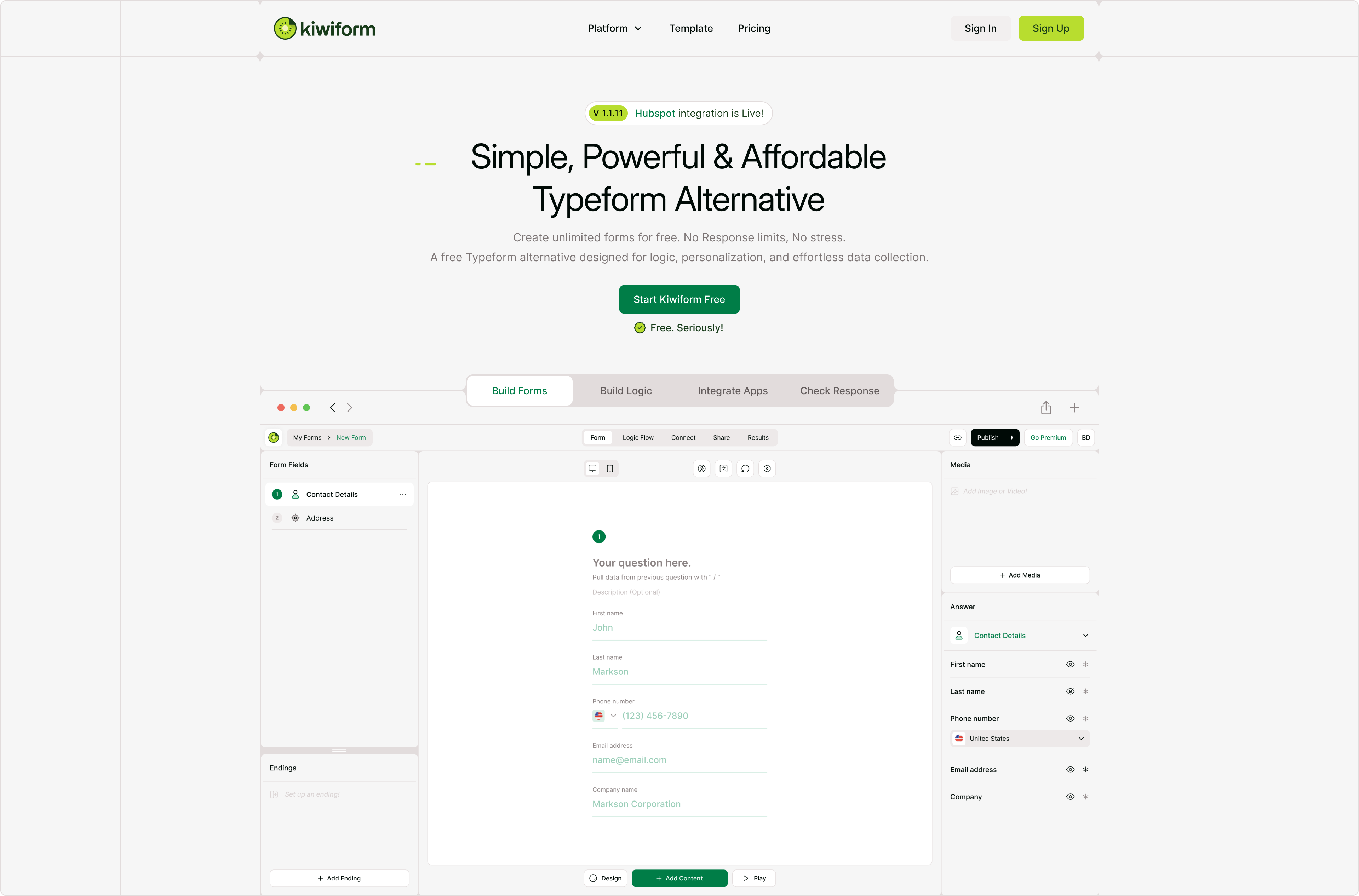
SurveyMonkey focuses heavily on research and survey administration. Kiwiform
focuses on helping organizations create engaging feedback experiences that
encourage participation while maintaining flexibility behind the scenes. Through
conversational surveys, advanced logic, automation, personalization, and
customizable experiences, teams can gather meaningful feedback without sacrificing
usability.
As a SurveyMonkey alternative, Kiwiform is designed for organizations that want to
move beyond traditional survey layouts while supporting customer feedback
programs, employee engagement initiatives, product research, lead qualification,
applications, and operational data collection. Unlimited forms and unlimited
responses provide room to scale as research and feedback requirements evolve.
- Pros
- Unlimited forms and responses
- Conversational survey experiences
- Advanced logic and branching
- Workflow automation capabilities
- Built-in AI form assistance
- Extensive customization options
- Cons
- Newer ecosystem than legacy platforms
- Advanced surveys require planning
- Smaller research-focused community
2. Qualtrics : Enterprise Research and Experience Management at Scale
Manage customer experience programs, employee feedback initiatives, market research projects, and large-scale organizational studies through advanced analytics and enterprise-grade research tools.
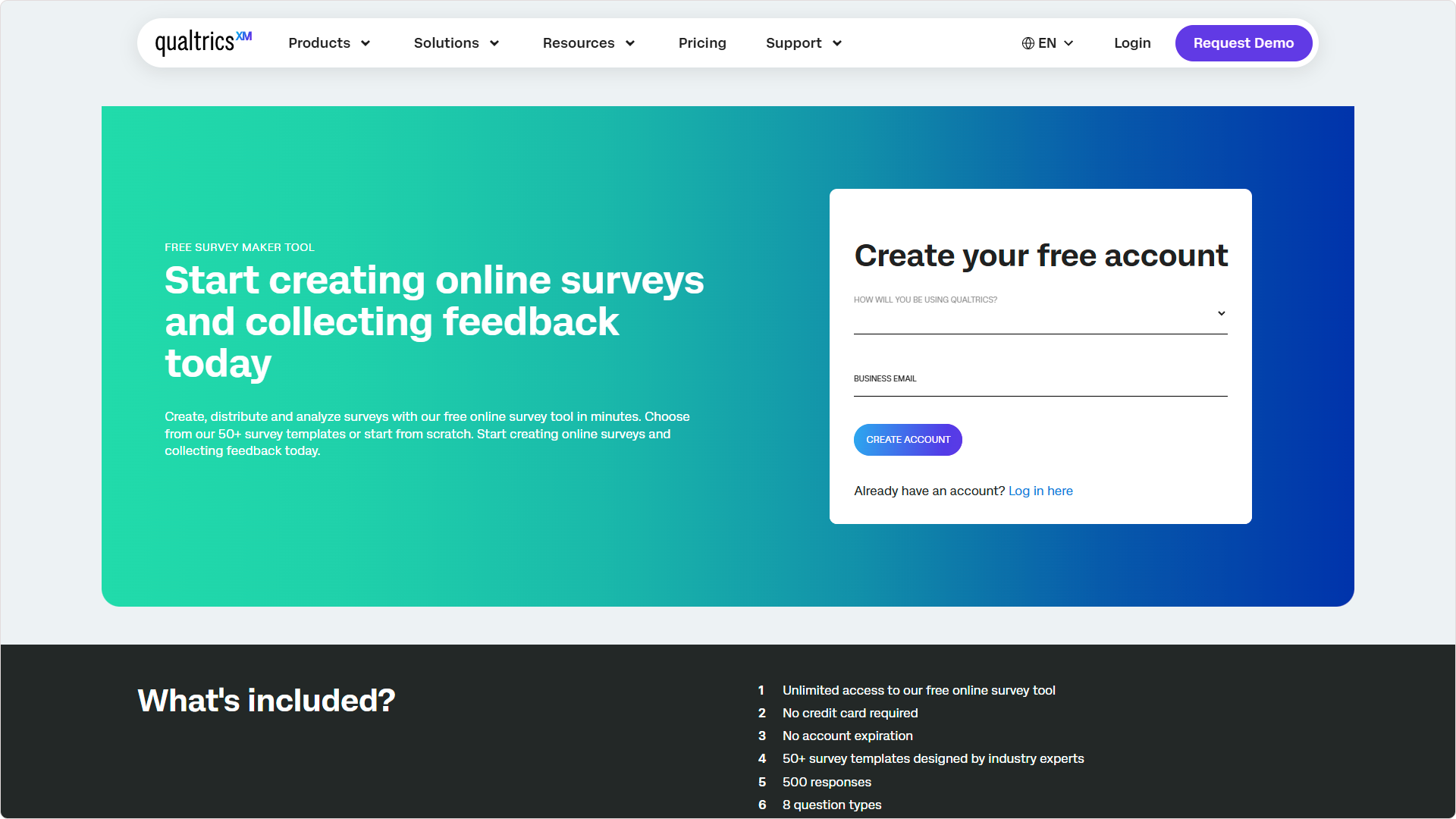
Qualtrics is widely regarded as one of the most sophisticated research and experience management platforms available. Large enterprises, universities, and research organizations use it to conduct complex studies, analyze behavioral trends, and manage customer and employee experience programs across multiple channels. For organizations evaluating a SurveyMonkey alternative, Qualtrics is often considered when advanced research capabilities, predictive analytics, and enterprise-scale insights become strategic priorities.
- Pros
- Advanced research capabilities
- Predictive analytics tools
- Enterprise-grade security
- Multi-channel feedback collection
- Detailed reporting features
- Strong experience management tools
- Cons
- Enterprise-level pricing
- Steep learning curve
- Complex implementation process
- Longer onboarding cycles
- Overkill for basic surveys
- Requires dedicated administration
3. Typeform : Survey Experiences Designed Around Participation
Deliver one-question-at-a-time surveys that help improve response quality, engagement, and completion rates across customer-facing feedback programs.
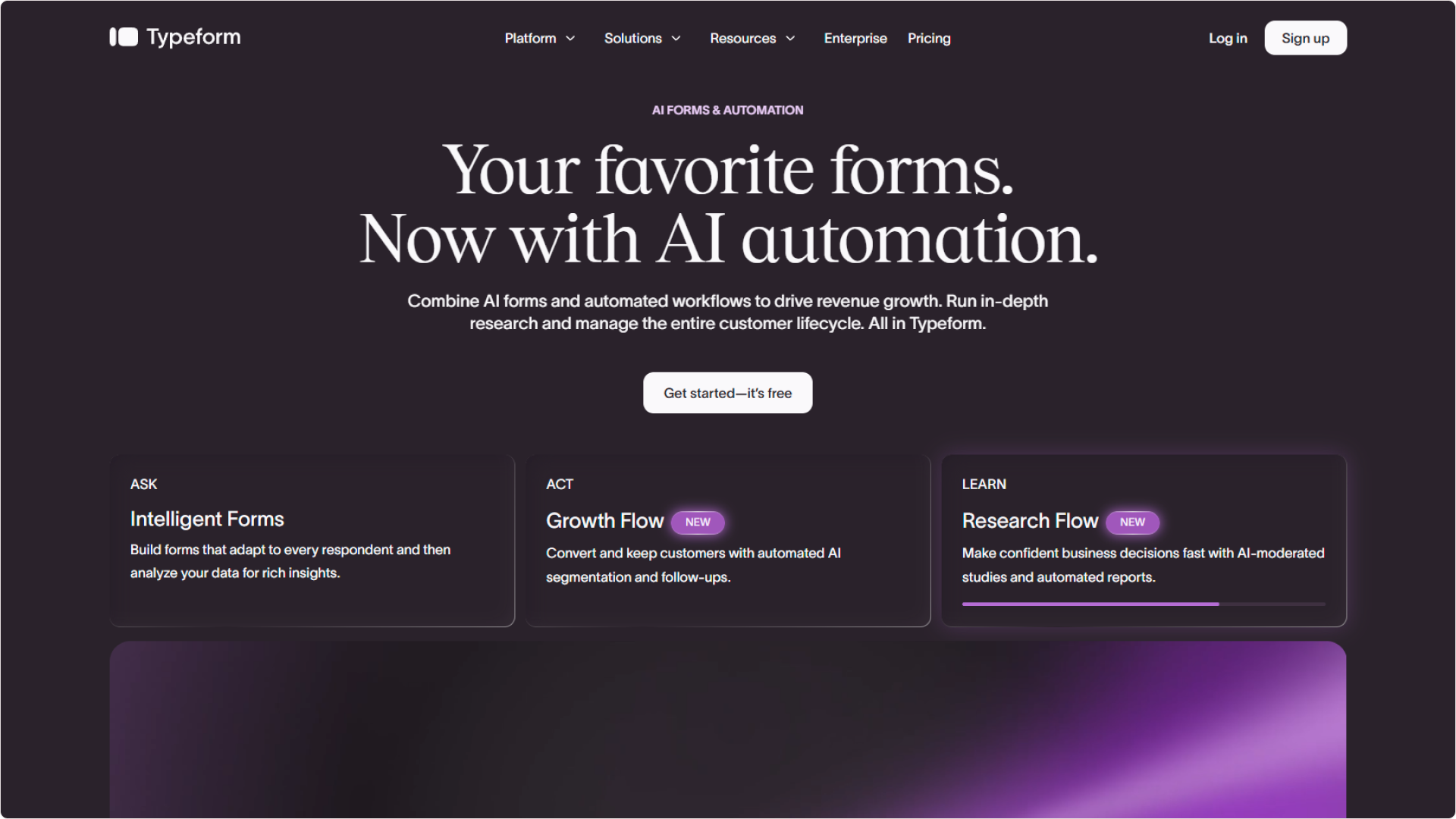
Typeform approaches surveys differently by focusing on how respondents experience
questions. Its conversational design reduces visual clutter and creates a more
interactive journey, making it particularly effective for customer feedback,
research questionnaires, satisfaction surveys, and lead generation.
As a SurveyMonkey alternative, Typeform appeals to organizations that want to
increase participation and improve respondent engagement through a more modern
survey experience.
- Pros
- Conversational survey design
- Strong visual presentation
- Interactive respondent journeys
- AI-assisted creation
- Broad integration ecosystem
- Optimized for engagement
- Cons
- Limited free responses
- Premium pricing structure
- Overage charges possible
- Branding restrictions apply
- Advanced features gated
- Scaling becomes expensive
4. Zoho Forms : Data Collection Connected to Business Operations
Combine survey collection, workflow automation, approvals, and operational processes through a platform deeply integrated with the broader Zoho ecosystem.
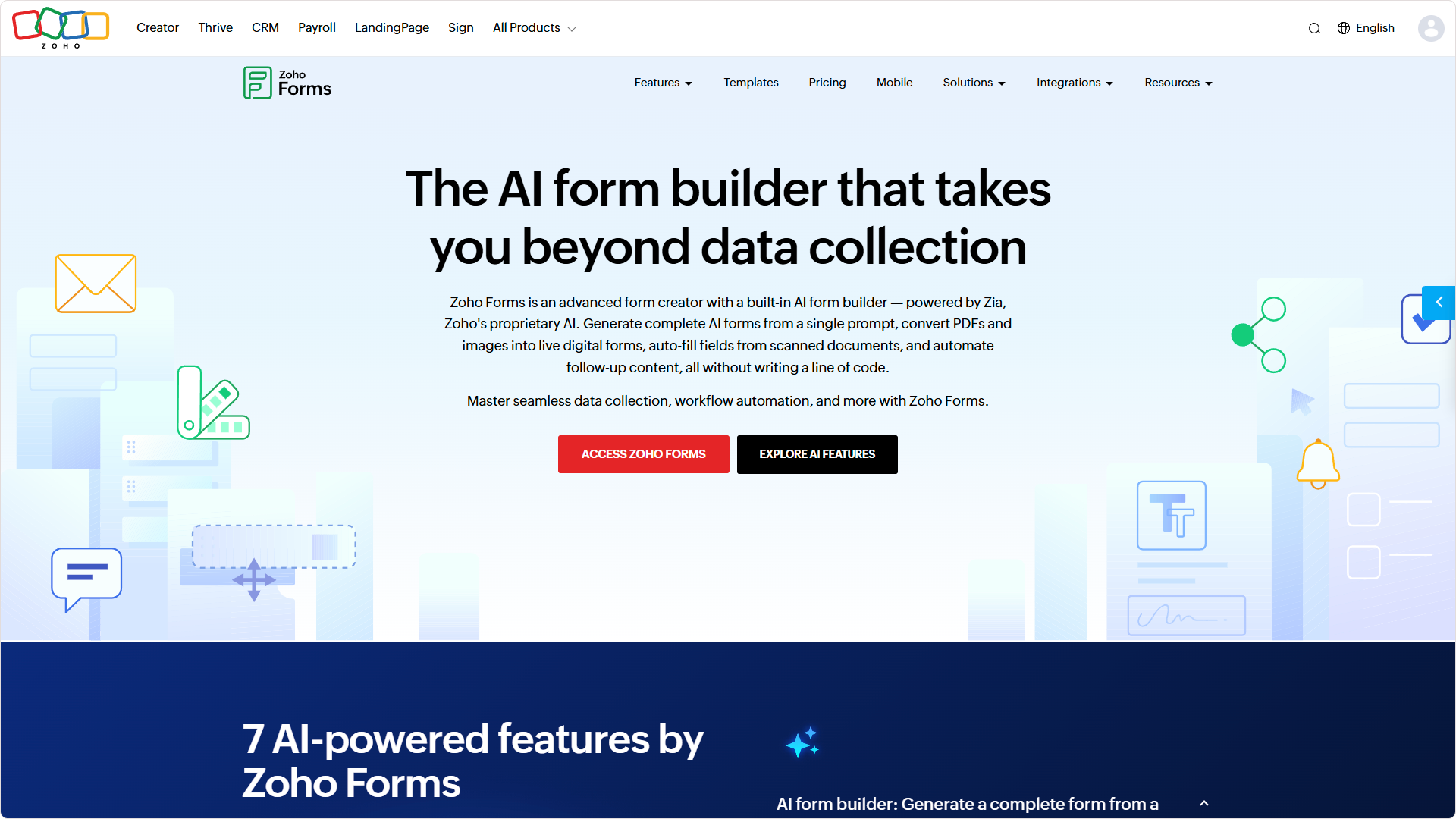
Zoho Forms serves organizations that want feedback collection to connect directly with business systems and operational workflows. Through integrations with CRM, support, project management, and productivity tools, teams can turn survey responses into actionable processes. For teams seeking a SurveyMonkey alternative, Zoho Forms is often attractive when feedback collection is closely tied to operational decision-making and customer management activities.
- Pros
- Strong Zoho integrations
- Workflow automation support
- Dynamic branching logic
- Offline mobile capabilities
- Payment collection support
- Business process flexibility
- Cons
- Limited visual design options
- Learning curve for advanced logic
- Dashboard complexity
- Restricted free plans
- Basic theme customization
- Less focused on research analysis
5. Microsoft Forms : Simple Feedback Collection Within Microsoft 365
Create surveys, quizzes, employee feedback programs, and internal assessments through a platform built around collaboration and productivity within Microsoft environments.
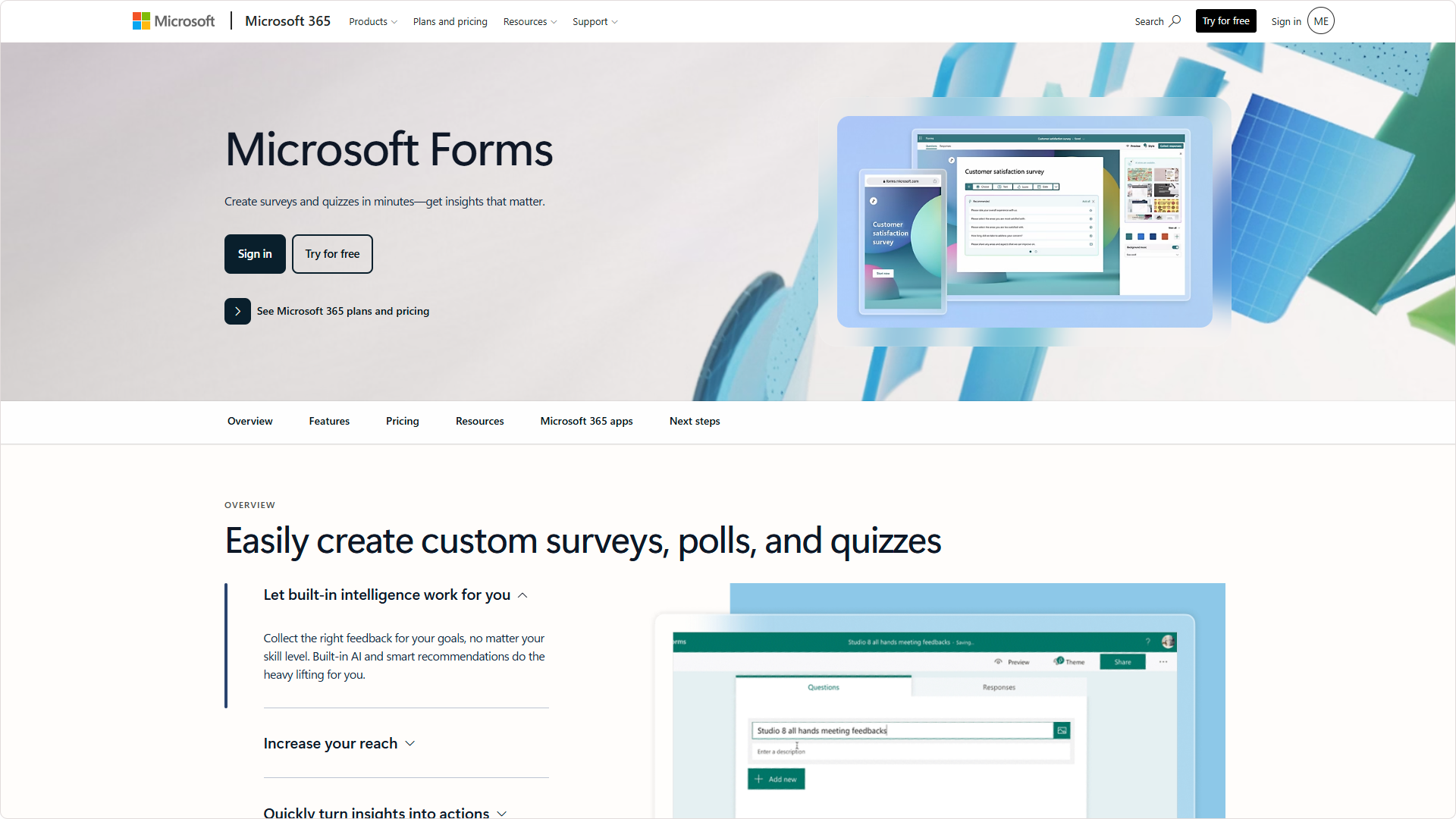
Microsoft Forms is commonly used for employee surveys, training evaluations, internal questionnaires, and organizational feedback collection. Its integration with Excel, Teams, and Microsoft 365 makes it particularly useful for organizations already operating within Microsoft's ecosystem. As a SurveyMonkey alternative, Microsoft Forms is often considered by teams seeking simplicity and workplace integration rather than advanced research capabilities.
- Pros
- Microsoft 365 integration
- Simple survey creation
- Easy collaboration tools
- Built-in quiz features
- Enterprise familiarity
- Strong security controls
- Cons
- Limited customization
- Basic survey design
- Restricted branding options
- Limited advanced analytics
- Less flexible logic controls
- No native payment collection
6. Google Forms : Accessible Surveys for Everyday Feedback Collection
Collect opinions, registrations, responses, and internal feedback through a lightweight platform that prioritizes accessibility, collaboration, and ease of adoption.
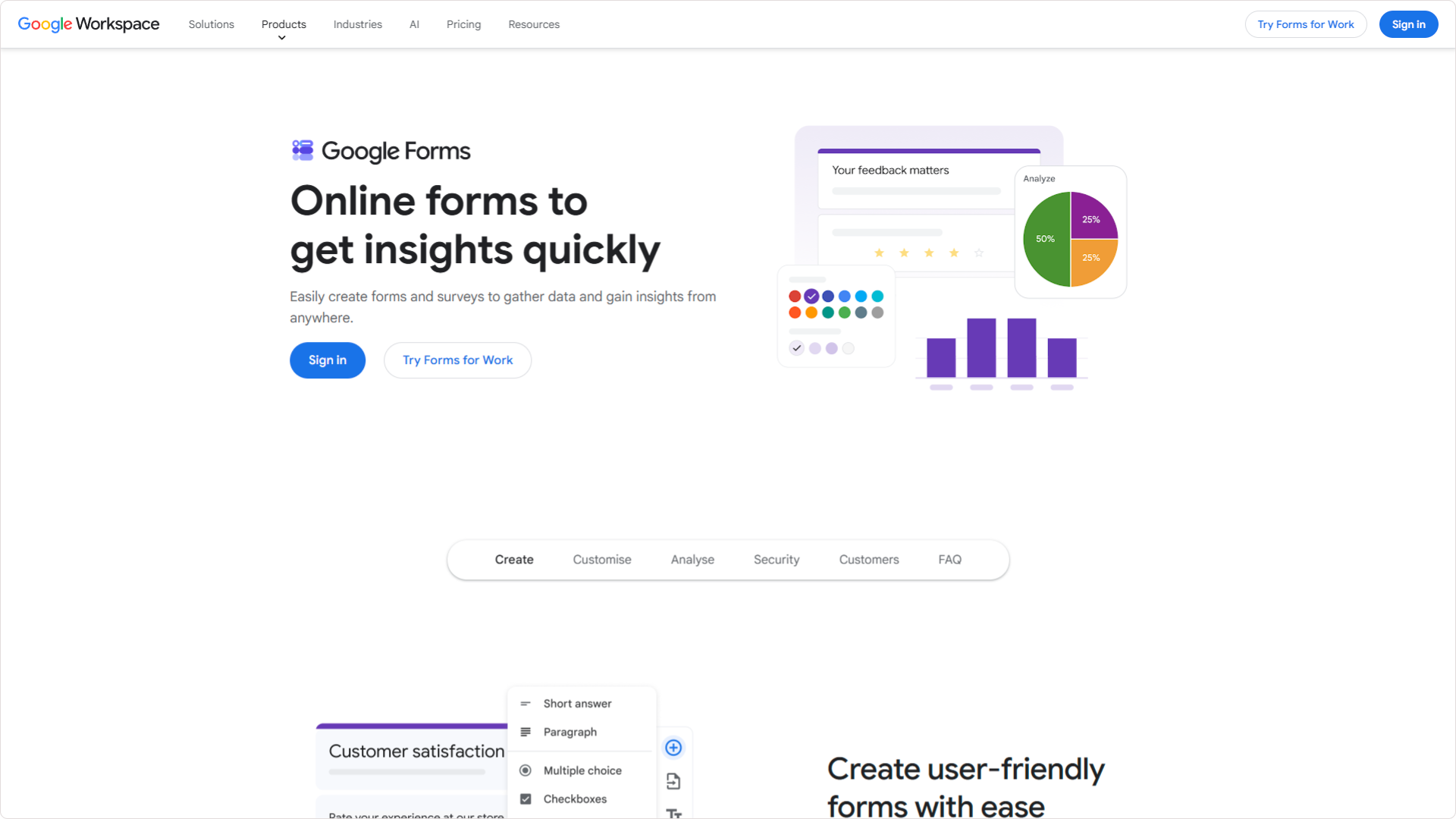
Google Forms remains one of the most widely used survey tools because it is simple, familiar, and free. Organizations frequently use it for customer feedback, registrations, event surveys, internal questionnaires, and educational assessments where speed and accessibility are priorities. For users evaluating a SurveyMonkey alternative, Google Forms offers a practical option for basic survey collection without the complexity associated with larger research platforms.
- Pros
- Free to use
- Google Workspace integration
- Easy collaboration
- Quick deployment
- Familiar user experience
- Reliable response collection
- Cons
- Limited customization
- Basic survey presentation
- Restricted branding control
- Minimal advanced analytics
- Basic logic capabilities
- Less suitable for research programs
Final Recommendation
Kiwiform: A SurveyMonkey Alternative Built for Modern Feedback Collection
Collect customer feedback, employee insights, research responses, and satisfaction data through engaging experiences designed to improve participation while supporting advanced logic, automation, and unlimited growth.
SurveyMonkey remains a popular platform for surveys, customer experience
initiatives, employee engagement programs, and research projects. Its strengths in
feedback collection and audience insights have made it a longstanding choice for
organizations seeking structured ways to understand customers, employees, and
markets. As expectations around survey experiences evolve, many teams begin
looking for solutions that provide greater flexibility, stronger branding,
improved engagement, and more adaptable data collection workflows.
Kiwiform combines conversational survey experiences, advanced logic, workflow
automation, customization, integrations, and unlimited usage within a single
platform. For organizations searching for a SurveyMonkey alternative that balances
feedback collection with modern respondent experiences and scalable data
collection capabilities, Kiwiform provides a flexible foundation for gathering and
acting on meaningful insights.