What Are Ecommerce Survey Questions?
Ecommerce survey questions help businesses understand how customers interact with their online store, from browsing and product selection to checkout and post-purchase experience.
The most effective ecommerce survey questions focus on real interactions: how users navigate, what influences purchases, where friction occurs, and what drives repeat buying. When designed well, these surveys reveal clear opportunities to improve conversions, satisfaction, and retention.
These questions are designed to capture feedback across the entire customer journey, helping teams identify what works well and where users face friction. Instead of relying only on analytics, surveys provide direct input from real customers.
They are used to evaluate:
These insights allow ecommerce teams to move beyond assumptions and make data-driven improvements.
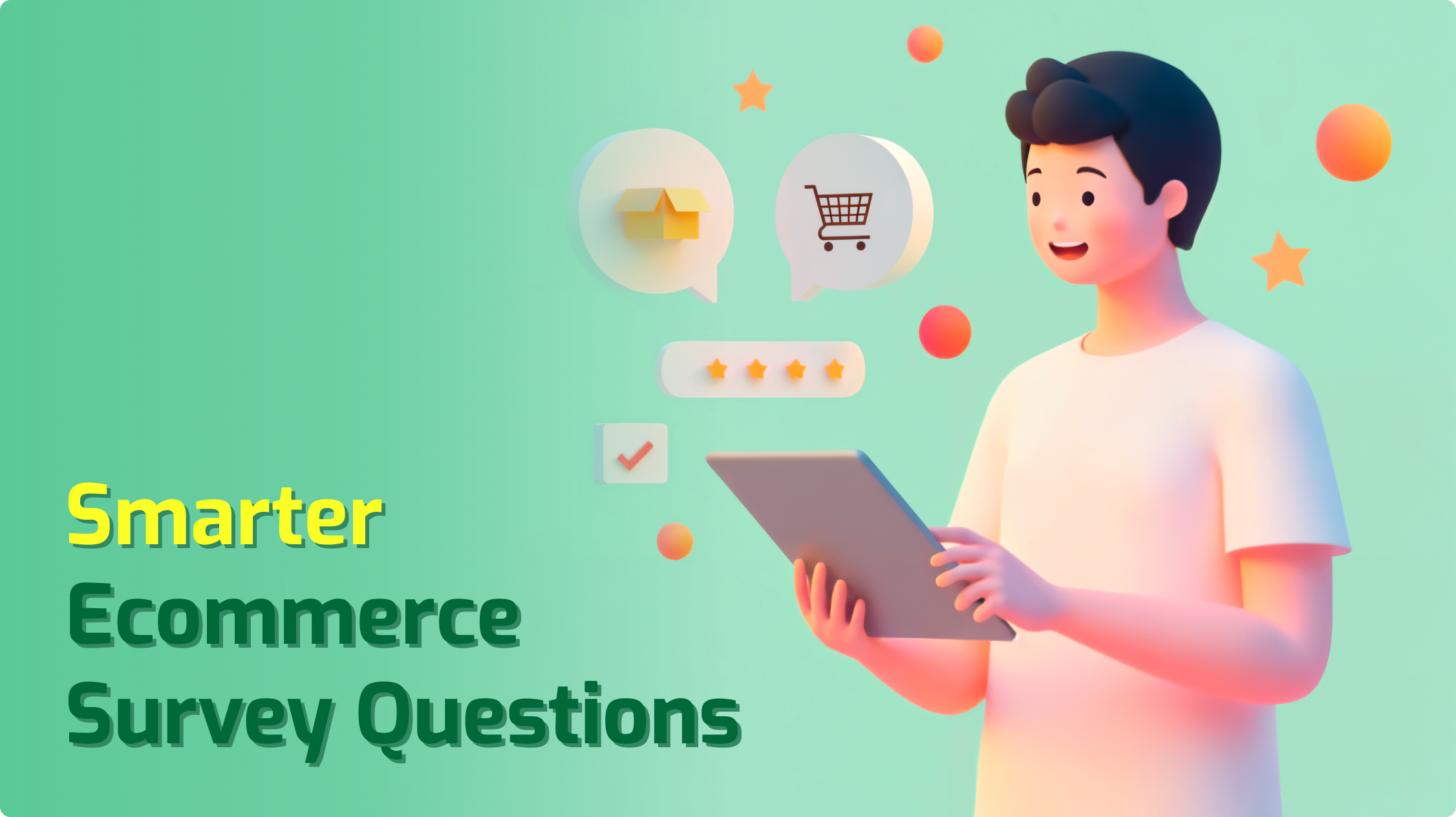
By collecting structured feedback, ecommerce businesses can evaluate usability, product satisfaction, delivery experience, and long-term loyalty. This makes survey data a critical part of improving conversions, reducing drop-offs, and delivering better customer experiences.
Start collecting ecommerce feedback with Kiwiform
25 Ecommerce Survey Questions
Below are 25 carefully selected questions grouped by key ecommerce touchpoints.
Website Experience
Understand how users interact with your store.
How easy was it to navigate our website?
Were you able to find what you were looking for quickly?
How would you rate your overall browsing experience?
Did anything confuse or slow you down while browsing?
What would improve your experience on our website?
Product Experience
Measure expectations vs actual product value.
How satisfied are you with the product you purchased?
Did the product meet your expectations?
How accurate was the product description?
How would you rate the product quality?
What could be improved about the product?
Checkout Experience
Identify friction in the buying process.
How easy was the checkout process?
Did you encounter any issues during checkout?
Were the payment options convenient for you?
How confident did you feel while completing your purchase?
What could make checkout faster or easier?
Delivery and Fulfillment
Evaluate post-purchase satisfaction
How satisfied are you with the delivery time?
Was your order delivered as expected?
How would you rate the packaging quality?
Did you receive clear updates about your order?
What could improve your delivery experience?
Customer Loyalty and Retention
Understand repeat behavior and long-term value.
How likely are you to purchase from us again?
How likely are you to recommend us to others?
What influenced your decision to buy from us?
What would encourage you to return in the future?
What is one thing we can improve to serve you better?
How Ecommerce Teams Collect Better Feedback with Kiwiform
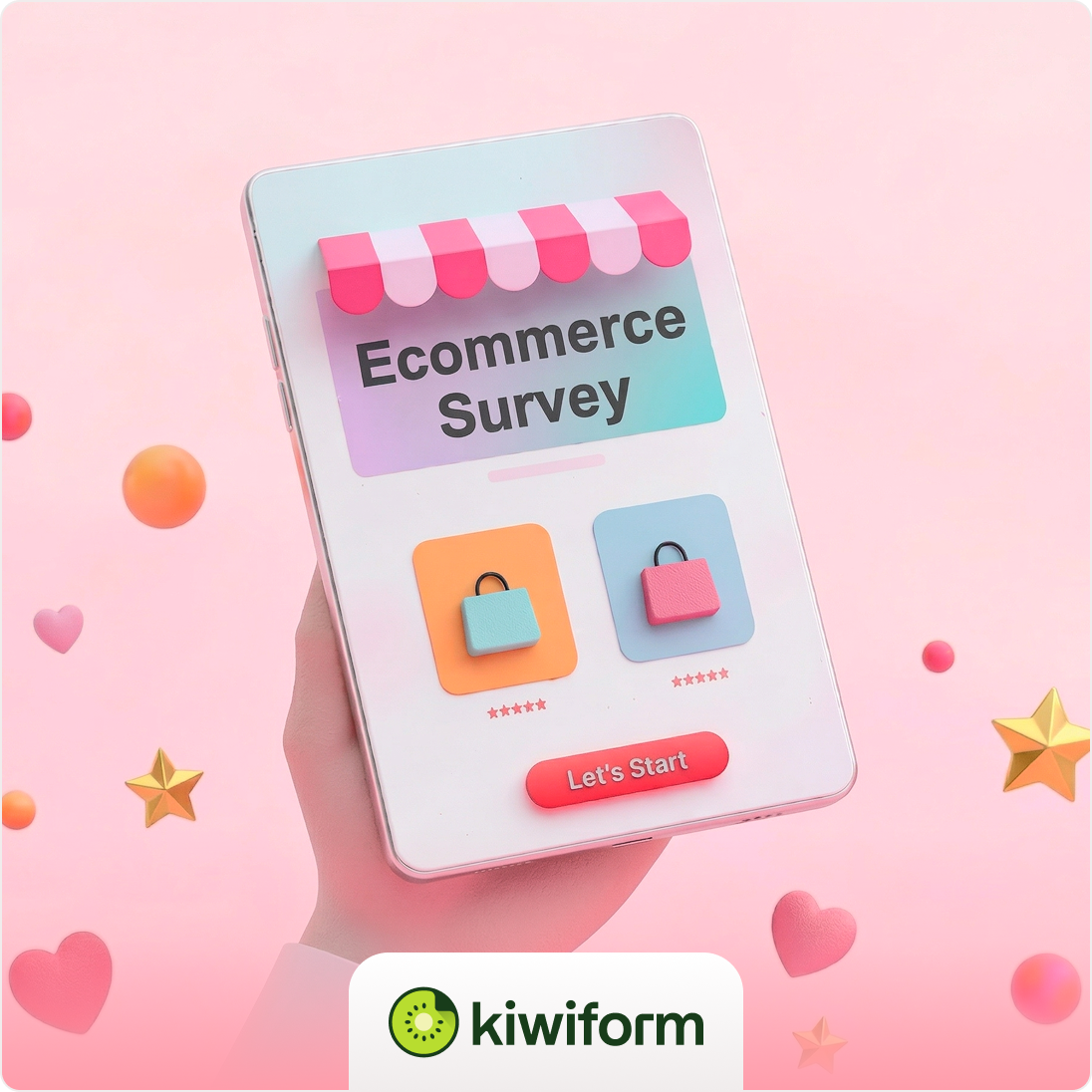
Collecting ecommerce feedback effectively requires more than just asking questions—it requires delivering surveys at the right time, in the right format, and with minimal friction. Many teams use Kiwiform to build feedback workflows that align with real customer journeys.
Kiwiform enables teams to:
Create conversational surveys that are easy to complete
Use logic to tailor questions based on user behavior
Collect responses seamlessly across devices
Organize and analyze feedback efficiently
Kiwiform also allows teams to capture feedback across devices seamlessly, ensuring that customers can respond easily whether they are on mobile or desktop. Responses are organized clearly, making it easier to identify trends, analyze feedback, and act on insights quickly.
Because Kiwiform supports unlimited forms and responses, ecommerce teams can continuously collect feedback at every stage—before purchase, after checkout, and post-delivery—without restrictions. This creates an ongoing feedback loop that drives consistent improvements in customer experience and business performance.
Build your ecommerce feedback workflow with Kiwiform
Why Ecommerce Surveys Matter
Ecommerce surveys provide direct customer insights that help businesses make informed decisions and improve performance across the entire shopping journey.
Unlike analytics tools that show what users do, surveys reveal why they behave that way. This deeper understanding allows teams to identify hidden friction points, validate assumptions, and improve decision-making with real customer input.
Ecommerce surveys help teams:
Identify drop-off points in the funnel
Understand customer expectations and satisfaction
Improve product positioning and descriptions
Optimize checkout and payment experiences
Increase repeat purchases and customer loyalty
When used consistently, surveys create a continuous feedback loop—helping businesses adapt faster and stay aligned with evolving customer needs.
Tips for Writing High-Impact Ecommerce Survey Questions
Designing good questions ensures reliable feedback and actionable insights.
Focus on real user behavior
Ask about actual interactions instead of assumptions.
Keep questions clear and specific
Avoid vague wording that leads to unreliable answers.
Balance ratings with open feedback
Combine structured responses with qualitative insights.
Trigger surveys at the right time
Post-purchase and post-delivery moments work best.
Keep surveys short and relevant
Short surveys improve completion rates and data quality.
Common Ecommerce Survey Mistakes to Avoid
Poorly framed questions can distort customer feedback and lead to misleading insights.
Avoid these common pitfalls:
Asking too many questions
Using unclear or generic wording
Ignoring post-purchase feedback
Failing to analyze collected responses
Not acting on insights
Effective surveys should be focused, actionable, and aligned with business outcomes.
Final Thoughts
Ecommerce success depends on understanding how customers experience your store at every stage. The right survey questions help uncover friction, validate decisions, and continuously improve the customer journey.
Using a structured platform like Kiwiform allows teams to collect feedback efficiently, organize insights clearly, and turn responses into meaningful improvements. When feedback becomes part of your workflow, better experiences, and stronger growth follow naturally.
Start improving your ecommerce experience with Kiwiform